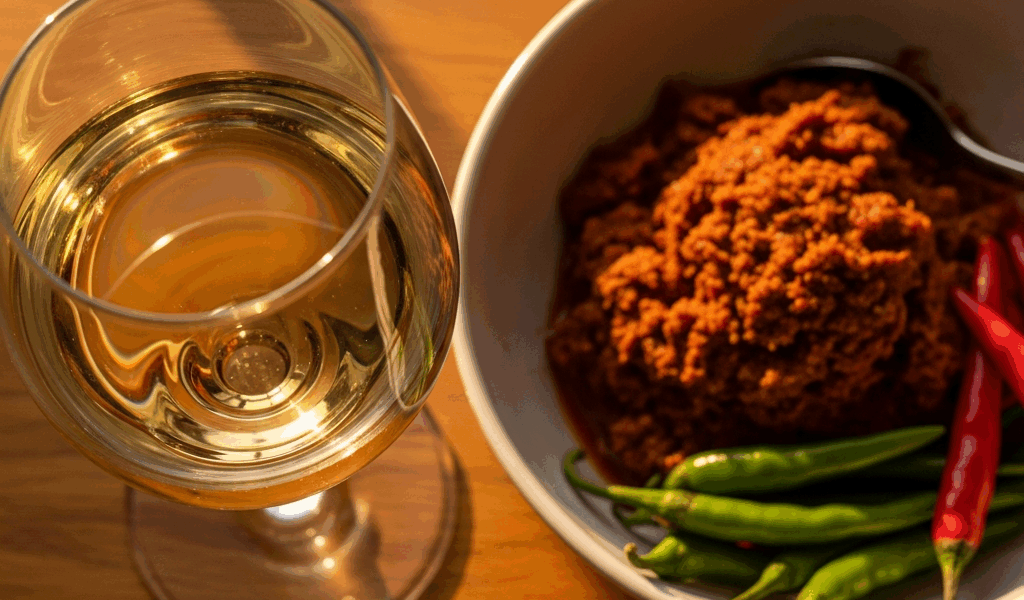
Why Most Wine Choices Make Spicy Food Worse
Wine pairing with spicy food has gotten complicated with all the contradictory advice flying around. “Drink red.” “No, drink white.” “Just drink beer.” Honestly, most of it misses the actual point — which is that certain things in wine don’t just fail to help with heat. They make it worse.
I spent three years making the same mistake at dinner. I’d cook Thai curry, open a bottle of Cabernet Sauvignon, take one sip with a spoonful of heat, and wonder why my mouth felt like it was on fire instead of enjoying the meal. The wine didn’t help. It made everything worse. Don’t make my mistake.
[foxdog-disclosure]
Two specific traits in wine are the culprits: alcohol and tannins. High alcohol burns. Pair a 14.5% ABV wine with jalapeños or Thai chilies and the alcohol’s heat stacks directly on top of the capsaicin’s heat. Your mouth doesn’t cool down. It escalates.
Tannins do something different but equally brutal. Those drying compounds in red wine bind to proteins in your mouth — the same receptors capsaicin goes after. The result? Heat that feels sharper, lasts longer, and refuses to wash away. A heavy Barolo next to a spicy vindaloo isn’t balance. It’s a conflict.
Most pairing guides skip this explanation entirely. They just say “drink this” without telling you why everything else failed. That’s what makes understanding the actual chemistry endearing to us spice-lovers — once you know it, you can’t un-know it. So, without further ado, let’s dive in.
What Actually Works — The Traits to Look For
Probably should have opened with this section, honestly.
The fix isn’t complicated, but it contradicts most assumptions people carry into a wine shop.
Low alcohol. Aim for 11–12.5% ABV. Not 14%. Not higher. Lower alcohol removes the competing heat source and lets the wine’s other qualities actually register. Your palate stays clearer, longer.
Slight sweetness. A touch of residual sugar cools the burn — not dessert-wine sweet, just a half-gram to a few grams per liter. That’s enough to coat your mouth and buffer the capsaicin without making the wine taste like juice.
Acidity. Good acid cuts through rich, spicy sauces and cleanses your palate between bites. You need enough to feel crisp. Not enough to sting.
Soft or no tannins. Non-negotiable. Tannins amplify spice. Skip them entirely or choose wines with barely-there tannin profiles.
Riesling checks every box. Low alcohol, off-dry to slightly sweet, naturally high acidity, zero tannin. Serving it in a proper Riedel Vinum Riesling glass makes the aromatics even more pronounced. Gewürztraminer works similarly — floral, aromatic, low alcohol, a touch of sweetness baked right in. I’m apparently a Riesling person and Trimbach works for me while heavier Alsatian whites never quite do.
But what is Lambrusco? In essence, it’s a fizzy red from Italy that most people dismiss as cheap and forgettable. But it’s much more than that. Low alcohol, slight sweetness, carbonation that refreshes the palate, minimal tannins — it actually excels with spice. The dismissal is undeserved.
Grenache-based rosés from Provence or Spain deliver low alcohol, dry profiles with good acidity, and almost no tannin grip. They feel weightless next to aggressive spice.
Best Wine With Spicy Food by Cuisine Type
Thai Cuisine
White pick: A Riesling from Alsace or a dry German Kabinett Riesling. The slight sweetness complements coconut-based curries and chile heat at the same time. Acidity handles lime-forward dishes. Look for Trimbach around $15 or a Barefoot Riesling closer to $12 if budget matters.
Red/rosé pick: Lambrusco Reggiano. The slight fizz and touch of sweetness are practically built for pad Thai and spicy stir-fries. A bottle runs $10–16 and routinely outperforms wines triple the price here.
Indian Cuisine
White pick: Gewürztraminer. The wine’s inherent spice notes mirror those in vindaloo and masala — low alcohol won’t compete with the dish. A reliable $14 bottle like Barefoot works fine. A $22 French producer works better.
Red/rosé pick: A dry Provence rosé. High enough acidity to cut through cream-based curries. Low enough tannin and alcohol that the wine stays in the background where it belongs. $15–20 is fair for something worth drinking.
Mexican Cuisine
White pick: Unoaked Pinot Grigio or Albariño. Mexico’s spice profile responds well to mineral backbone and low alcohol. Albariño’s salinity handles chile-lime salsas beautifully — around $12–15 and widely available.
Red/rosé pick: A light Grenache or Grenache blend from Spain. Spanish wines share a flavor language with Mexican food. Low alcohol, soft tannins, enough acid to refresh. $13–18.
Korean and Sichuan Cuisine
White pick: A slightly sweet off-dry Riesling. Korean gochujang’s fermented, chile-forward heat pairs remarkably well with Riesling’s aromatic profile. The sweetness softens the blow without erasing the dish.
Red/rosé pick: Lambrusco again, or a light Pinot Noir from a cooler region — Oregon or New Zealand, not Napa. Pinot’s low tannins and red fruit character work with the numbing heat of Sichuan peppercorns. $13–20.
Wines to Avoid With Spicy Dishes
Cabernet Sauvignon has no place at a spicy meal. The tannins grip. The alcohol amplifies heat. Full stop.
Barolo and Barbaresco are regional masterpieces — just not here. Heavy tannin structure and high alcohol make spice feel aggressive instead of balanced. Save them for a roast.
Zinfandel, especially California versions above 14.5% ABV, will overwhelm everything on the plate. The wine’s bold nature doesn’t support heat. It fights it.
High-alcohol Chardonnays are too rich and oily to cut spice cleanly. Butter and weight are the last things you need when your mouth is already on fire.
A Few Reliable Bottles to Try
Under $15: Barefoot Pinot Grigio (California). Clean, bright, no oak interference. Low alcohol at 12.4%. Works across nearly every spicy cuisine and you can find it at basically any grocery store.
$15–25: Trimbach Riesling (Alsace, France). Off-dry, aromatic, 12.5% ABV. This is the workhorse for serious spice pairing — slightly minerally, never cloying, worth every dollar over the budget options.
Splurge pick: Domaines Ott Château de Selle Rosé (Provence, France). Around $28–32. Dry, complex, mineral-driven. Proves that serious wine can handle serious heat without compromise.
Budget red option: Lambrusco di Modena (Italy), any producer you find. $10–14. Slightly sweet, fizzy, low alcohol. A genuine game-changer if you’d written off red wine entirely.
Start with Riesling or Lambrusco. Both work across multiple cuisines and multiple price points, and neither requires advanced knowledge to enjoy. A Le Creuset Wine Cooler Sleeve keeps your white wines at the right serving temperature throughout the meal. The real win is matching low alcohol and minimal tannin to whatever heat is on your plate — everything after that is just refinement.



Stay in the loop
Get the latest pairing with wine updates delivered to your inbox.