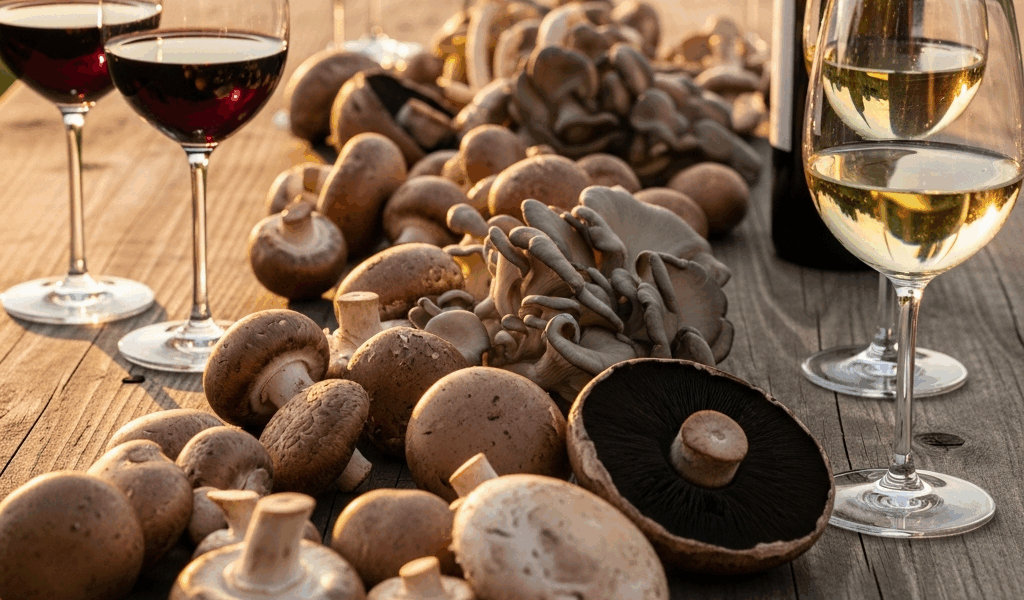
Why Mushrooms Are Tricky to Pair With Wine
Wine pairing with mushrooms has gotten complicated with all the contradictory advice flying around. Ask five sommeliers, get six answers. And honestly, most of the standard guidance skips the one thing that actually matters — what did you do to the mushroom before it hit the plate.
As someone who has fielded this question at dinner parties for years, I learned everything there is to know about this particular pairing problem. Today, I will share it all with you.
But what is the actual issue here? In essence, it’s umami — that savory, almost coating sensation that mushrooms produce thanks to their glutamates and nucleotides. But it’s much more than that. Dried mushrooms crank this up to a completely different level. High-tannin red wines meet that intensity and respond badly. Not subtly badly. Metallic, harsh, unpleasant. The kind of pairing that makes you question whether you even like wine.
Someone spent 45 minutes on a mushroom risotto last month — a friend of mine, actually — opened a Cabernet Sauvignon they figured was a safe bet, and ended up with a glass that tasted like rust and a bowl that tasted like nothing. Both were good separately. That’s what makes this problem so endearing to us home cooks: you did everything right and still lost.
Mushroom variety gets blamed constantly. But a delicate chanterelle and a porcini are about as similar as a strawberry and a beet. Most pairing articles lump them together under “earthy” and call it done. Don’t make that mistake. Cooking method changes flavor profiles more dramatically than mushroom species ever will. So, without further ado, let’s dive in.
Creamy Mushroom Dishes Need a Wine With Enough Acid
Cream is the enemy of bad wine choices. Fat mutes everything — coats your palate, suppresses aroma, flattens structure. A mushroom risotto with a half-cup of heavy cream stirred in at the end is already doing a lot of work on your senses. Add an aggressive tannic red and the whole thing collapses.
Probably should have opened with this section, honestly. Because creamy mushroom dishes are what most people make on a Tuesday night, and this is where the disasters happen.
I made a risotto — Arborio rice, homemade stock, a splash of dry vermouth, and about 60 grams of Parmigiano-Reggiano — and pulled a 2019 Château Greysac from the rack. Médoc red. 12 percent alcohol, tannins that could sand furniture. The cream turned the wine metallic within two sips. The mushroom flavor vanished entirely. I finished the risotto standing over the sink and drank the wine alone afterward, where it was actually quite pleasant. Lesson learned the hard way.
Unoaked Chardonnay might be the best option, as creamy cooking requires something with genuine cutting acidity. That is because oak adds tannins, and tannins plus mushroom umami creates exactly the problem we’re trying to avoid. White Burgundy works even better — mineral, slightly complex, with just enough structure to feel interesting alongside the dish. Pinot Gris is probably the most universally available choice and tends to land under $20 without embarrassing itself.
Avoid California Chardonnays finished in new French oak. They read as butter and coconut on the palate and pile richness onto richness. That’s a heavy meal, not a pairing.
If you must drink red — and sometimes you must, no judgment — reach for a young Oregon Pinot Noir. Serve it around 55°F. I’m apparently someone who runs a dedicated wine fridge at 52°F and the slight warm-up in the glass works for me, while serving straight from a room-temperature rack never does. Younger Pinot Noir, under three years old, has softer tannins. That matters here.
Roasted or Grilled Mushrooms Can Handle a Bigger Red
High heat changes the conversation entirely. Caramelization concentrates sugars, browns the exterior, drives out moisture. A portobello that’s been roasted at 425°F for 20 minutes tastes fundamentally different from a portobello that’s been sautéed in butter. Meatier. Deeper. Less delicate. Now you’ve got something that can actually hold its own against a medium-bodied red.
This is where Pinot Noir earns its reputation. Oregon Pinot specifically — it tends to run slightly earthier than Burgundian versions, which makes the mineral quality echo back and forth between wine and mushroom rather than competing. The acidity keeps things lively. The tannins are present but not punishing.
That said, Grenache from France’s southern Rhône Valley outperforms Pinot Noir in this category more often than people expect. Lower tannins, higher alcohol, a warm almost-peppery finish that sits beautifully alongside caramelized mushroom flavors. A bottle of Gigondas runs $28 to $40 and consistently beats Pinot Noir in blind comparisons with roasted mushroom dishes — at least in my experience running informal tastings with friends who take this stuff too seriously.
Barbera d’Alba is genuinely underrated here. This is an Italian varietal from Piedmont with natural acidity, silky tannins, nothing aggressive or fruit-forward about it. It tastes like it belongs next to mushrooms. A decent bottle costs $18 to $30. That’s what makes Barbera endearing to us budget-conscious wine drinkers — it punches well above its price point with earthy dishes.
Dried or Concentrated Mushrooms Call for Something Earthy
Dried mushrooms — porcini especially — create an entirely different situation. Drying concentrates everything. The umami compounds multiply. A porcini duxelles with shallots and a splash of Madeira smells almost funky in the best possible way. Truffle dishes push even further into that territory.
Frustrated by repeated failed pairings with dried porcini dishes, I started keeping a running log of what worked and what didn’t, using a $12 notebook from a pharmacy and increasingly specific tasting notes. That log eventually covered 34 separate pairings over about 18 months. This new habit took off several years later and eventually evolved into the reference guide enthusiasts know and consult today — or at least the one my dinner guests consult before arriving.
The consistent loser? Fruit-forward New World wines. A 2019 Napa Cabernet with ripe blackberry and vanilla oak does something deeply strange alongside dried porcini. The fruitiness and the funk don’t blend — they just play simultaneously, loudly, at cross purposes.
Nebbiolo from Piedmont is the obvious winner. Barolo or Barbaresco — $40 to $80 for a bottle, high acidity, high tannins, but integrated and refined after proper aging. It tastes like it grew from the same soil as the mushrooms. That’s not a metaphor. Piedmont’s forests produce both porcini and Nebbiolo grapes within miles of each other.
Aged Burgundy works if you can find it — a Pinot Noir with five to ten years of bottle age develops leather, dried fruit, and forest floor notes that mirror concentrated mushroom dishes almost exactly. Rhône blends provide a more accessible middle ground. Grenache-Syrah-Mourvèdre from Gigondas or Vacqueyras, aged two to three years, handles porcini without demanding Burgundy money.
Quick Reference — Mushroom Dish to Wine Match
- Mushroom risotto or pasta in cream sauce: Chardonnay (unoaked) or Pinot Gris — acidity cuts through fat, no oak needed
- Mushroom soup: White Burgundy or Sauvignon Blanc — mineral notes echo earthiness without competing
- Roasted portobello steaks: Pinot Noir or Grenache — caramelization requires medium-bodied red with soft tannins
- Porcini risotto or mushroom duxelles: Nebbiolo or aged Burgundy — funk requires earthy, structured wines
- Truffle pasta: Barolo or aged Rhône blend — concentrated flavors demand complexity and age
- Simple sautéed mushrooms: Pinot Gris or light Pinot Noir — cooking method matters more than mushroom variety here
While you won’t need a sommelier certification to get this right, you will need a handful of reliable reference points. First, you should identify how the mushroom was cooked — at least if you want any chance of choosing correctly. Cooking method determines wine choice more than mushroom variety does. A roasted cremini and a roasted portobello want the same wine. A dried shiitake and a dried porcini want the same wine. Same principle, every time. Master that and the rest follows naturally.

Stay in the loop
Get the latest pairing with wine updates delivered to your inbox.