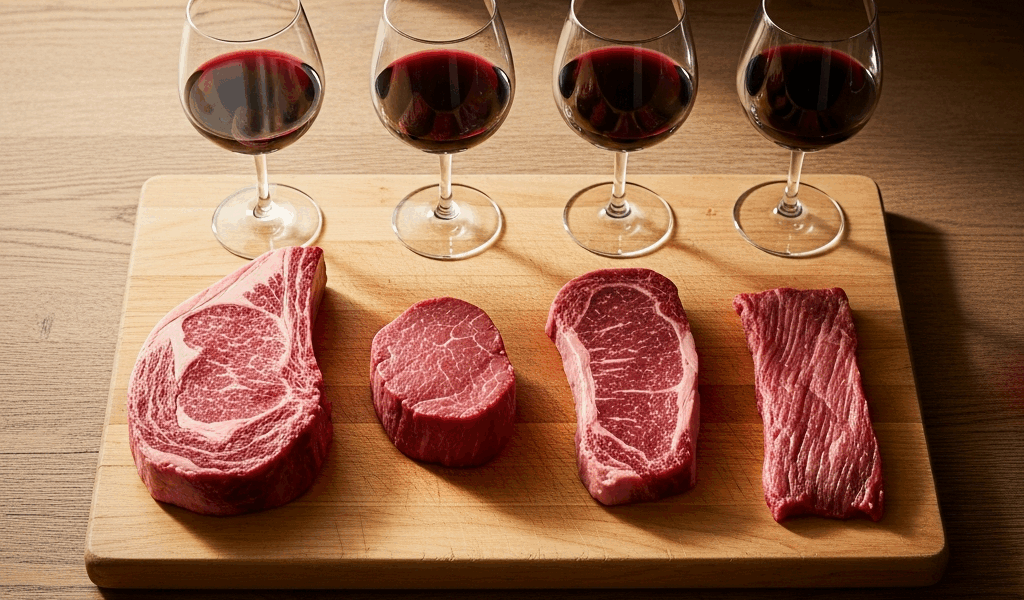
What Wine Pairs With Steak by Cut and Cook — A Real Decision Framework
Wine pairing with steak has gotten complicated with all the generic advice flying around. “Just grab a Cabernet” gets repeated so often it’s basically background noise now. But here’s the thing — that advice will actively ruin certain steaks. I’ve watched it happen at my own dinner table.
As someone who has stood in enough wine aisles and navigated enough restaurant wine lists in a mild panic, I learned everything there is to know about matching wine to the actual steak in front of you. Not steak as a concept. The specific cut. The specific doneness. The sauce, if there is one. Today, I will share it all with you.
So, without further ado, let’s dive in.
Why the Cut Changes Everything
But what is a “steak pairing framework,” really? In essence, it’s a way of reading your specific cut and working backward to the right bottle. But it’s much more than that — it’s understanding why fat content and cooking temperature physically change how wine feels in your mouth.
Ribeye and New York strip run roughly 30% fat by weight. That fat is mouth-coating, savory, almost luxurious. It needs tannins — those astringent compounds in red wine — to cut through it. Without them, the whole experience feels greasy and flat.
Filet mignon sits around 8% fat. Maybe less. The texture is genuinely delicate, and the flavor is mild. Throw an aggressive, tannic Cabernet at it and the steak essentially disappears. The wine wins. Nobody actually wanted that.
Skirt and flank are a different situation entirely. Usually marinated. Often sauced. With these cuts, what you’ve done to the meat matters more than the meat itself.
High-fat, bold cuts need bold wines. Lean, delicate cuts need wines that whisper rather than shout. Sauce-forward cuts need wines built for acid and spice. That’s the whole decision tree. Everything below flows from it.
Ribeye and Strip — Go Bold or Go Home
These are the cuts that actually reward you for picking a serious bottle.
Cabernet Sauvignon is the obvious answer, and it earns that reputation. The tannins latch onto the fat, the alcohol amplifies the umami, and you get this back-and-forth where neither element steamrolls the other. It’s satisfying in a way that feels almost mechanical once you understand the chemistry.
Malbec is the sleeper pick here — specifically Argentine Malbec or bottles from the Cahors region of France. Same tannic structure as Cab, but without that heavy oak quality that makes some Cabernets feel like you’re chewing a barrel. If your ribeye is seasoned simply — just kosher salt and cracked pepper — Malbec feels cleaner, fresher.
Syrah also works beautifully. Especially with a hard sear and some char on the crust. There’s a peppery, smoky undercurrent in Syrah that mirrors that charred edge almost perfectly.
Budget option that I actually keep in my house: Alamos Malbec, around $12. Not glamorous. Absolutely does the job.
Splurge option: Caymus Vineyards Cabernet Sauvignon Special Selection, roughly $90. People recognize it at the table. It genuinely improves a great ribeye. Worth keeping in mind for occasions that require a little theater.
One thing nobody mentions — well-done ribeye becomes a genuine problem for bold pairings. The fat renders out. The meat dries. Suddenly that aggressive tannin structure has nothing to cut through except tough muscle fiber, and the whole pairing turns harsh. If your ribeye is past medium, back off. A softer Merlot or even a Pinot Noir starts making more sense than you’d expect.
Filet Mignon Needs a Lighter Touch
Probably should have opened with this section, honestly. This is where I see the most confident mistakes.
Five years ago I paired a massive, oaky Cabernet — I think it was a 2018 Napa bottle I’d paid around $55 for — with a beautifully cooked filet mignon at a dinner party. The wine steamrolled the steak completely. The beef tasted hollow. Everyone was extremely polite about it. Don’t make my mistake.
Filet is delicate. The wine needs to be, too. Full stop.
Pinot Noir is the answer. Enough body that it doesn’t feel wimpy next to beef, but the tannins are soft, the acidity balanced, and those cherry and earthier mushroom notes actually complement lean meat instead of burying it. Oregon Pinot — Willamette Valley specifically — tends to have the right structure for this. Good acid, earthy undertones, nothing too aggressive.
Merlot is genuinely underrated for filet. A real Merlot — not the thin mass-produced stuff — has a silky texture and red fruit character that sits beautifully against tender, mild beef. I’m apparently a Merlot person for lean cuts, and a bottle from Duckhorn works for me while cheaper grocery-store Merlot never quite lands the same way.
Aged Bordeaux blends are another solid path. Something that’s been in bottle for ten or fifteen years has softened considerably. The sharp edges have rounded out. You’re tasting nuance and balance rather than raw power — which is exactly what filet calls for.
The sauce matters here more than people realize. Mushroom cream sauce, peppercorn sauce — these add umami and richness that give you more flexibility. Suddenly a mid-weight Burgundy or even a lighter Cab becomes viable because the sauce is doing the structural heavy lifting. Without sauce? Stay elegant. Let the filet and the wine actually talk to each other.
Skirt and Flank — Sauce Is the Real Variable
That’s what makes skirt and flank endearing to us home cooks — they’re forgiving, adaptable, and the marinade or sauce you choose genuinely tells you which wine to open.
Chimichurri? Reach for Malbec. The parsley and garlic echo the herbal, peppery notes in Argentine Malbec specifically. The sauce’s acidity plays off the wine’s tannin structure in a way that feels almost intentional.
Soy-based marinades or anything heavy on smoked paprika? Tempranillo. Those leather and spice notes in Tempranillo were practically designed for grilled skirt steak with bold, savory seasoning. Grenache also works — enough fruit sweetness to balance salt without tasting flat.
Citrus marinades — lime, lemon, any of them — create a specific problem. The acid in the marinade combined with the acid in a big oaky Cabernet produces something genuinely unpleasant. Bitter, clashing, harsh. A young Grenache, a Côtes du Rhône, or a lighter Pinot Noir handles citrus-forward preparations cleanly. The wine tastes bright instead of combative.
I’ve watched people agonize over pairing a $16 bottle with a skirt steak when the real answer takes about four seconds: look at the sauce, build from there.
Does Doneness Actually Matter for Wine Pairing?
Yes. More than most guides admit.
Rare and medium-rare beef has more juice, more umami, more of those complex mineral notes that come from the meat’s natural proteins. Tannins interact harmoniously with these compounds. The fat and juice lubricate your palate so the wine doesn’t turn astringent.
Well-done beef is drier. Proteins contracted, fat rendered, meat running toward bitter. High-tannin wines taste even more aggressive against dry, overcooked beef. That pairing feels punishing.
Practical version of this: rare to medium-rare, your standard pairing logic holds. Medium-well or well-done — soften everything. Merlot instead of Cabernet. Grenache instead of Syrah. Pinot Noir instead of anything with serious tannin structure.
Quick cheat sheet: Match fat content and doneness, not just the meat category. Fatty cuts at any doneness can handle bold wines. Lean cuts need soft wines regardless of temperature. Well-done versions of any cut need softer pairings than rare versions of the same cut. And if there’s a sauce, start there and work backward.
The steak you’re actually eating — that specific cut, that specific doneness, that specific preparation — is the guide. Not “steak” as some abstract category. That distinction is the entire point.



Stay in the loop
Get the latest pairing with wine updates delivered to your inbox.