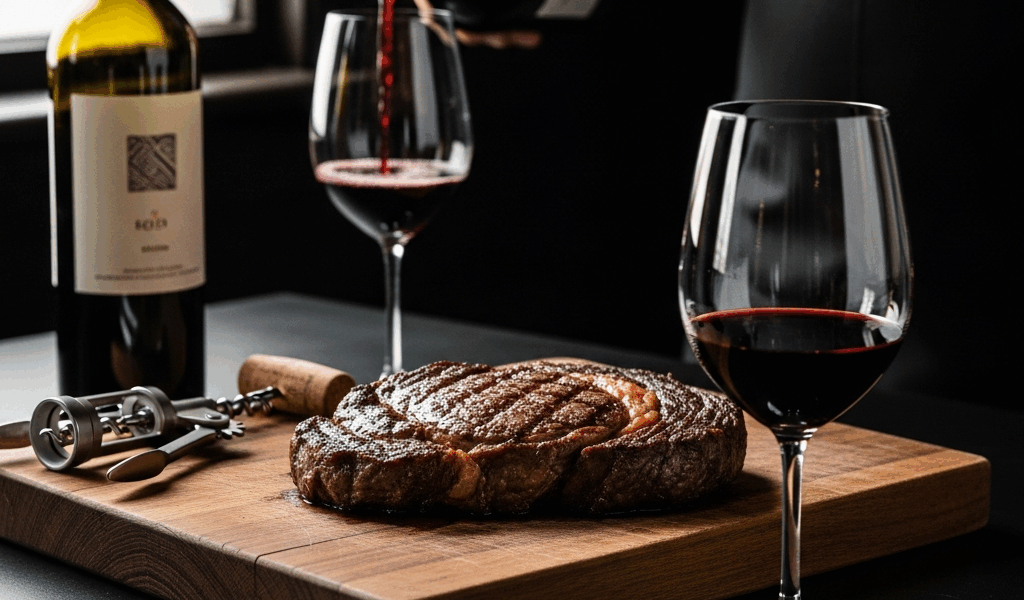
Wine Pairing with Steak — The Right Bottle for Every Cut
Wine pairing with steak has gotten complicated with all the vague, useless noise flying around online. “Drink a big red.” Cool. Super helpful. As someone who’s been cooking and eating steak seriously for about fifteen years, I learned everything there is to know about one thing the hard way — different cuts want completely different wines. Not just different varieties. Different weight, different tannin structure, different price points entirely. A $14 bottle of Malbec from Mendoza can outperform a $55 Cabernet Sauvignon depending on what’s on your plate. I’ve made that mistake more than once — standing in a wine aisle squinting at labels, grabbing something impressive-looking, then sitting down to a meal where the wine just bulldozed everything. The steak deserved better. So did I.
This guide breaks it down by cut — ribeye, filet mignon, NY strip, and sirloin — with specific bottle recommendations at three price points for each. Under $20, $20–$40, and over $40. Real bottles you can find at most Total Wine locations or on Wine.com with shipping to most states.
Ribeye — Bold Wines for Bold Fat
Ribeye is the most forgiving steak to pair wine with — which is probably why most generic steak-and-wine articles use it as their invisible default without ever saying so. It’s heavily marbled, rich, and fatty. A 16-ounce bone-in ribeye from a USDA Prime cut can carry a fat content north of 30 percent. That fat needs something to cut through it. That something is tannin.
But what is tannin? In essence, it’s the compound found in grape skins and oak aging that creates that drying, grippy sensation in your mouth. But it’s much more than that — when tannin meets fat, it breaks down the richness, resets your palate, and lets the next bite taste like the first. A low-tannin wine with ribeye just gets swallowed. The wine disappears. You taste steak, then beef fat, then nothing interesting. Not pleasant.
The Grapes — Cabernet Sauvignon, Malbec, Zinfandel
Cabernet Sauvignon is the classic choice, and classics earn that status for a reason. California Cab — Napa or Paso Robles, specifically — brings black currant, cedar, and firm tannins that stand up to ribeye without blinking. Argentine Malbec is the underdog here, offering plum and dark cherry with softer tannins that still have enough structure to do the job. Zinfandel from Lodi or Sonoma brings a jammy, almost spicy character that plays beautifully against the char on a well-seared crust. That’s what makes Zinfandel endearing to us steak enthusiasts — it’s never pretentious about what it is.
Bottle Recommendations
- Under $20 — Bodegas Caro “Aruma” Malbec (around $13–$15): Made by the same partnership behind Catena Zapata, this bottle consistently overdelivers. Dark fruit, violet notes, enough tannin to handle the fat. Widely available and easy to find on a Tuesday night.
- $20–$40 — Louis M. Martini Sonoma County Cabernet Sauvignon (around $22–$28): This is the bottle I default to for ribeye nights when I’m not trying to impress anyone but still want something genuinely good. Blackberry, tobacco, structured tannins. Reliable vintage after vintage — honestly, it never lets me down.
- Over $40 — Stag’s Leap Wine Cellars “Artemis” Cabernet Sauvignon (around $55–$65): Napa Valley, full stop. Cassis, graphite, long finish. Open this when the ribeye is USDA Prime and the occasion warrants it. Worth every dollar.
One thing I got wrong for years — pairing ribeye with heavily oaked Chardonnay because someone told me fat-on-fat works. It doesn’t. Not here. Butter against beef fat is just a greasy blur with nothing interesting happening. Don’t make my mistake. Stick to red, stick to tannin.
Filet Mignon — Elegant Cuts Need Elegant Wines
Probably should have opened with this section, honestly, because it’s where the most people go wrong. Filet mignon is the leanest major steak cut — pulled from the tenderloin, it has almost no intramuscular fat. A 6-ounce center-cut filet might carry less than 8 grams of total fat. Delicate. Tender. Almost silky when cooked properly to medium-rare, somewhere around 130–135°F internal.
And people keep pouring massive tannic Cabernets over it and wondering why everything tastes harsh.
Heavy tannins need fat to bind to. Without that fat, they just park on your tongue and turn the whole experience bitter. The wine doesn’t mellow. The steak doesn’t shine. Nobody wins.
The Grapes — Pinot Noir, Merlot, Côtes du Rhône Blends
Pinot Noir is the answer most sommeliers reach for with filet — and they’re right. It’s lighter-bodied, lower in tannin, built around red fruit. Cherry, raspberry, sometimes a hint of earthiness that complements the subtle beefy flavor of tenderloin. Burgundy Pinot is the gold standard, but good Oregon Pinot from the Willamette Valley does the job at a lower price point. Merlot — real Merlot, not the watered-down stuff that gave the grape its bad reputation after Sideways — is softer, plummier, a solid middle-ground choice. A Côtes du Rhône, typically a blend of Grenache, Syrah, and Mourvèdre, offers red fruit with gentle spice and a medium body that won’t bulldoze a delicate cut.
Bottle Recommendations
- Under $20 — Meiomi Pinot Noir (around $16–$18): California tri-county blend. Strawberry, blackberry, a touch of mocha. Smooth, accessible, and apparently everywhere — which is useful when you’re shopping at 6pm. It pairs beautifully with filet without asking too much of you.
- $20–$40 — A to Z Wineworks Oregon Pinot Noir (around $20–$25): Oregon Pinot at a price that actually makes sense for a weeknight. Cherry, earth, light oak. Medium body. This is the bottle I reach for when I’m cooking filet for two on a Tuesday and want something that feels special without being precious about it.
- Over $40 — Elk Cove Vineyards Willamette Valley Pinot Noir (around $45–$55): This is where Oregon Pinot starts to really sing. Complex red fruit, floral notes, silky tannins. Paired with a perfectly seared filet, this combination is genuinely one of the best things you can eat at home for under $100 total.
Surprised by how few people consider a white Burgundy with filet mignon — which sounds insane until you try it. A rich, aged Meursault alongside a butter-basted filet is extraordinary. But that’s an advanced pairing for another article.
NY Strip and Sirloin — The Middle Ground
NY strip and sirloin sit between ribeye and filet in fat content and flavor intensity. Strip has more fat than filet — the fat cap on a well-trimmed 14-ounce strip is real and flavorful — but less marbling than ribeye. Sirloin is leaner than strip but carries a more pronounced beef flavor than tenderloin. Both are medium-intensity steaks. They want medium-intensity wines.
This is where a lot of the best everyday pairing actually happens. The sweet spot. You’re not hunting for something aggressive enough to tame a ribeye, and you’re not tiptoeing around delicate tenderloin. You have real range here.
The Grapes — Merlot, Tempranillo, Sangiovese
Merlot — good Merlot — handles NY strip really well. The plum and berry notes, medium tannins, and smooth finish don’t overpower the strip’s beefiness but still provide structure. Tempranillo, the backbone of Spanish Rioja, is an underrated choice for strip and sirloin. Earthy, leather, dried cherry, moderate tannin — it mirrors the slightly gamier flavor of sirloin in a way that’s genuinely compelling. Sangiovese, whether Chianti Classico or a mid-level Brunello, brings acidity and red fruit that cuts through strip fat cleanly. Italians have been pairing Sangiovese with beef for centuries. They know what they’re doing, apparently.
Bottle Recommendations
- Under $20 — Campo Viejo Rioja Reserva (around $14–$17): Spanish Tempranillo aged in oak. Cherry, vanilla, leather. For under $17, this bottle performs at a level that routinely surprises people — especially with a NY strip finished in garlic compound butter. That combination is hard to beat at the price.
- $20–$40 — Duckhorn Vineyards Napa Valley Merlot (around $35–$40): This is the bottle that rehabilitated Merlot for me after years of dismissing it. Plum, black cherry, cocoa, silky tannins. Full enough to stand up to strip without overwhelming it. One of the best value-for-quality bottles Duckhorn produces.
- Over $40 — Fontodi Chianti Classico (around $45–$55): Sangiovese from one of Chianti’s best producers. Sour cherry, tobacco, herbs, bright acidity. Pair this with a sirloin finished with rosemary and a drizzle of good olive oil and you’ll feel like you’re eating in Tuscany. Which is not a bad feeling for a Thursday night.
Still turned off by Merlot? Try the Duckhorn before you decide anything. The grape got unfairly maligned — that’s a mass-market problem, not a Merlot problem.
The One Rule That Makes Every Pairing Work
Here’s everything above compressed into one principle: match wine weight to meat richness.
Fat needs tannin. Lean needs finesse. That’s it.
Rich, heavily marbled cuts — ribeye, tomahawk, wagyu — need wines with enough structural tannin to reset the palate between bites. The wine should feel like it’s meeting the steak as an equal. Lean cuts like filet need wines that are elegant and restrained, wines that let the meat’s subtle flavor come forward rather than drowning it. Medium cuts — strip, sirloin, flank, even skirt steak — want medium-bodied wines that provide structure without aggression.
Frustrated by a pairing that didn’t work? The answer is almost always one of two things: the wine was too tannic for the cut, or too light to stand up to it. Calibrate from there and you’ll get it right the next time.
When You’re Not Sure — Go Malbec
Argentine Malbec might be the best default steak wine, as the category requires both versatility and availability. That is because Malbec carries enough tannin to work with marbled cuts, enough fruit to stay pleasant with leaner ones, and enough mainstream shelf presence that you can find a solid bottle at a grocery store at 7pm on a Friday when you completely forgot to plan. The Achaval Ferrer Malbec ($25–$30) is my personal default when I’m uncertain. Dark fruit, medium-full body, smooth tannins. Works with everything short of the most delicate filet.
While you won’t need a wine cellar or a sommelier on speed dial, you will need one good habit — serving temperature. Red wines for steak should come in around 60–65°F, what wine people call “cellar temperature.” Not room temperature in a 72°F kitchen, which makes tannins taste flat and dull. If your bottle has been sitting on a shelf, put it in the fridge for 20 minutes before opening. That’s a free upgrade. Genuinely noticeable difference.
A Final Note on Spending
First, you should know — at least if you’re tempted to reach for something expensive — that you don’t need to spend $50 on wine to have a great steak pairing. The under-$20 bottles in each section above are real recommendations, not consolation prizes. I spent $130 on a bottle of Opus One once to pair with a dry-aged ribeye, expecting something transformative. It was good. But the Louis M. Martini Cab at $25 alongside the same steak delivered about 80 percent of the experience at 20 percent of the cost. Diminishing returns hit wine spending earlier than most people think.
Know your cut. Match the weight. Keep a bottle of Malbec in reserve. That’s the whole system.



Stay in the loop
Get the latest pairing with wine updates delivered to your inbox.