Appetizer wine pairing has gotten complicated with all the advice flying around about what to pour first. As someone who’s started countless dinners with the wrong wine before figuring out how to set the right tone, I learned everything there is to know about opening a meal properly. Today, I will share it all with you.
The Aperitif Philosophy
Probably should have led with this section, honestly. Appetizers should whet the appetite, not fill you up. The same goes for their wine partners. You want something bright, refreshing, and lower in alcohol that prepares the palate for what’s coming rather than overwhelming it before dinner even starts.
Sparkling wine is the default choice for a reason — its bubbles stimulate the appetite and its acidity cleanses the palate. But plenty of still wines work beautifully depending on what you’re serving.
Light Bites and Canapés
That’s what makes versatile wines endearing to us hosts — tiny passed hors d’oeuvres (bruschetta, shrimp cocktail, crudités, cheese puffs) call for wines that work across different flavors.
Best choices:
- Champagne or quality Crémant
- Dry Prosecco
- Light Sauvignon Blanc
- Dry rosé
When appetizers are varied, pick one wine that handles everything rather than trying to match each bite. Your guests will appreciate the simplicity.
Charcuterie and Cheese Boards
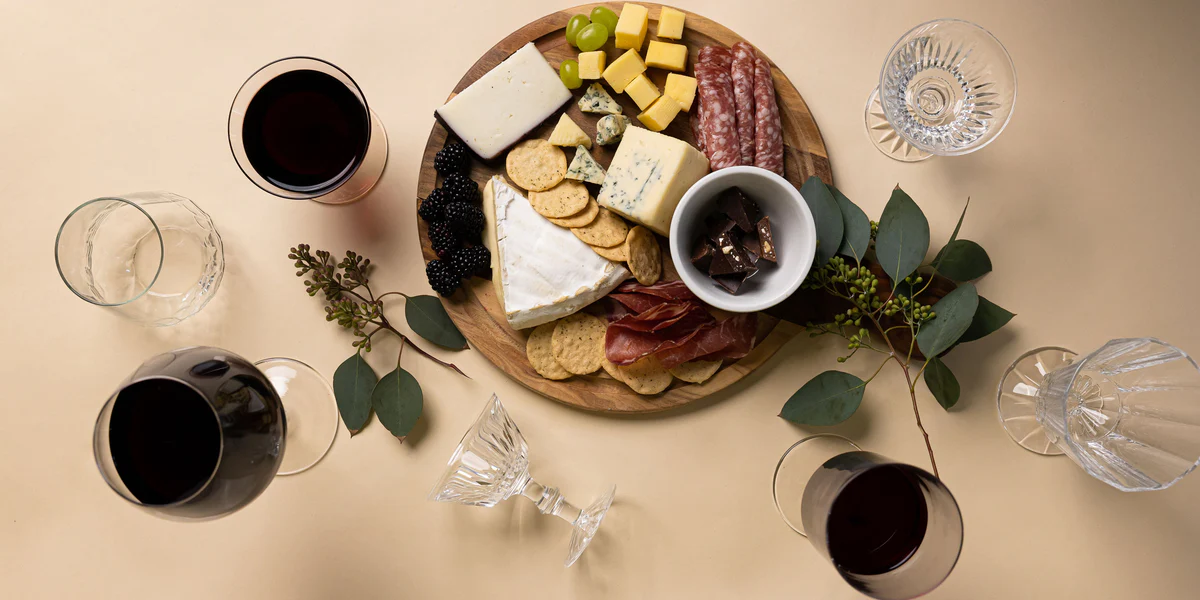
A spread of cured meats, cheeses, olives, and nuts is the most wine-friendly appetizer imaginable. Almost any wine works, but some shine brighter.
Rosé’s versatility makes it ideal — it handles both meat and cheese while staying refreshing. Spanish Cava complements Manchego and jamón beautifully. If you’re going red, choose something light and chillable like Beaujolais or Valpolicella.
Oysters and Raw Bar
Raw shellfish demands precise pairing. Too much wine overwhelms the delicate ocean flavors you’re paying premium prices for.
Classic pairings:
- Muscadet with oysters (the briny benchmark)
- Chablis with any raw shellfish
- Champagne for celebration
- Txakoli for something Spanish and fun
Soup Course
Soup and wine is tricky — the temperature conflict can be awkward. Lighter soups work best with wine:
Gazpacho loves dry sherry (Fino or Manzanilla). Bisque pairs with oaked Chardonnay. Consommé is elegant enough for Champagne. Heavy cream soups can handle a crisp white but often work better without wine at all.
Salad Course
Vinaigrette is wine’s enemy — its acidity makes most wines taste flat and dull. Two solutions:
- Skip wine during the salad course entirely
- Match the wine’s acidity to the dressing’s. High-acid Sauvignon Blanc or Vinho Verde can work
Salads with cheese (goat cheese, blue cheese, Parmesan) give wine something to grab onto. Match the wine to the cheese and you’ll be fine.
The First-Course Red Wine
Not every appetizer needs white wine. Beef carpaccio, duck liver mousse, or mushroom tarts can all start dinner with a light red. The key is choosing something light enough not to tire the palate before the main course — Burgundy, Beaujolais, or cool-climate Pinot Noir.
Plan Your Meal
Continue the journey: Cheese Pairings | Sparkling Wines | Dessert Pairings. For hosting help, see our Wine Dinner Party Guide.