
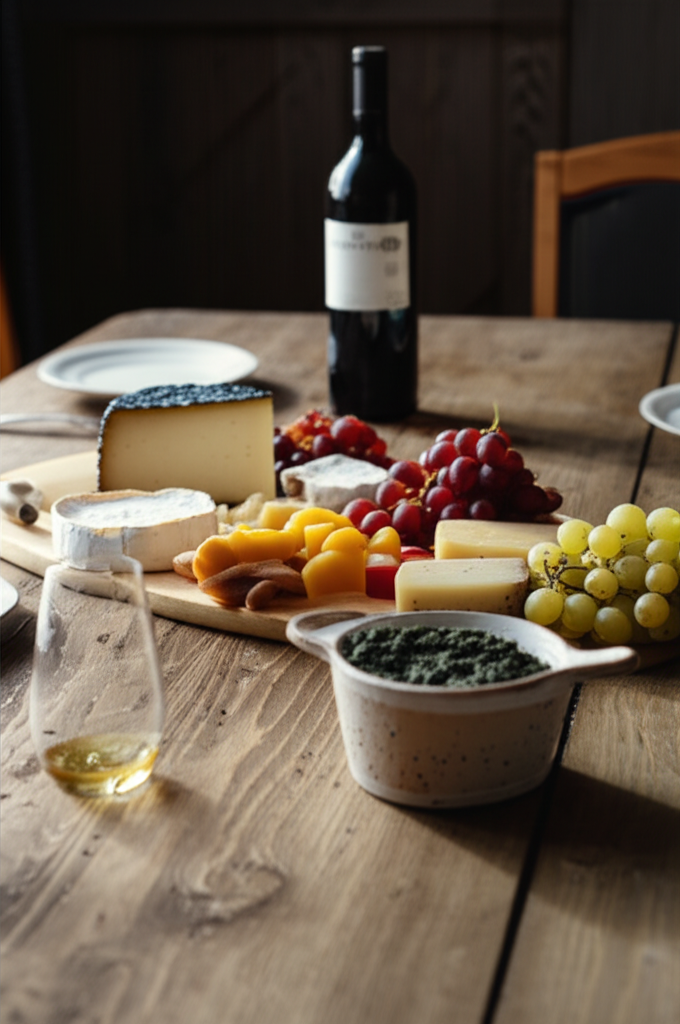
Cheese and wine pairing has gotten complicated with all the “curated board” culture and overwrought advice flying around. As someone who’s been throwing together cheese plates for years, I learned everything there is to know about what actually matters — and it’s way simpler than most people make it sound. I threw together a cheese plate last week—literally just grabbed what looked interesting at the store—and it was better than half the “curated” boards I’ve had at wine bars. The secret? I stopped overthinking it.
Forget the Rules
Every article about cheese and wine pairings makes it sound like chemistry. “Match the intensity!” “Consider the tannins!” “Balance the fat content!”
Here’s what actually matters: do you like eating it? Then it works.
That said, some combinations are genuinely better than others. Not because of science, but because certain flavors just click.
Pairings I Keep Coming Back To
Aged cheddar + Cabernet Sauvignon — The sharpness of a good aged cheddar can handle big reds. Something like a 2-year Vermont cheddar with a California Cab. The cheese’s crystalline crunch and the wine’s dark fruit are surprisingly good together.
Brie + Champagne — Creamy cheese, acidic bubbles. The Champagne cuts through the richness. Works with any dry sparkling wine, doesn’t have to be actual Champagne. Good Crémant does the job for half the price.
Blue cheese + sweet wine — Port and Stilton is the classic, but Sauternes with Roquefort might be even better. The sweetness tames the funk. If you think you don’t like blue cheese, try it this way before giving up entirely.
Manchego + Rioja — Spanish cheese, Spanish wine. The nutty, slightly oily Manchego with a medium-bodied Rioja Crianza. That’s what makes regional pairings endearing to us wine lovers — the foods evolved together.
Goat cheese + Sancerre — I’ve written about this before but it bears repeating. The Loire Valley makes both the cheese and the wine. They’re perfect together in that annoying way where you can’t improve on it.
Building a Cheese Plate That Works
Three to five cheeses is plenty. More than that and people get overwhelmed.
I aim for variety:
- One soft (Brie, Camembert, fresh chèvre)
- One hard (aged cheddar, Gruyère, Manchego)
- One interesting (blue cheese, washed rind, something weird)
Add some crackers that don’t taste like anything—you want them to carry the cheese, not compete with it. Throw on some marcona almonds or dried apricots. Done.
Wine Selection for the Lazy (Like Me)
If you’re serving multiple cheeses, pick versatile wines. A dry sparkling wine handles almost everything. A medium-bodied red like Pinot Noir or Côtes du Rhône works with most cheeses. A crisp white like Albariño or Grüner Veltliner won’t clash with much. Probably should have led with this section, honestly — wine selection is what people stress about most.
Or just put out two bottles—one red, one white—and let people figure it out. Nobody’s taking notes. They’re eating cheese and drinking wine. It’s inherently a good time.
The One Actual Rule
Serve the cheese at room temperature. Fridge-cold cheese tastes like nothing. Take it out at least 30 minutes before serving, an hour if you can manage it. This makes more difference than any pairing advice.