Why Salmon Breaks the White Wine Rule
Wine pairing with salmon has gotten complicated with all the conflicting advice flying around. Ask three sommeliers and you’ll get four opinions. I’ve hosted enough dinner parties — and made enough quietly embarrassing bottle choices — to have learned what actually works here. Today, I will share it all with you.
Here’s the thing most guides won’t tell you upfront: salmon is not like other fish. Tilapia, sole, halibut — delicate stuff. They get completely bulldozed by anything with real body or tannin. Salmon is built differently. The fat content in a quality fillet, especially wild-caught sockeye or king salmon, gives it enough backbone to stand up against bolder wines. That’s what makes salmon endearing to us wine-obsessed home cooks. It’s the one fish where reaching for a red isn’t a completely unhinged idea.
But what is the real variable here? In essence, it’s preparation method. But it’s much more than that — it’s everything. Grilled salmon and poached salmon are essentially different meals wearing the same name. So, without further ado, let’s dive in.
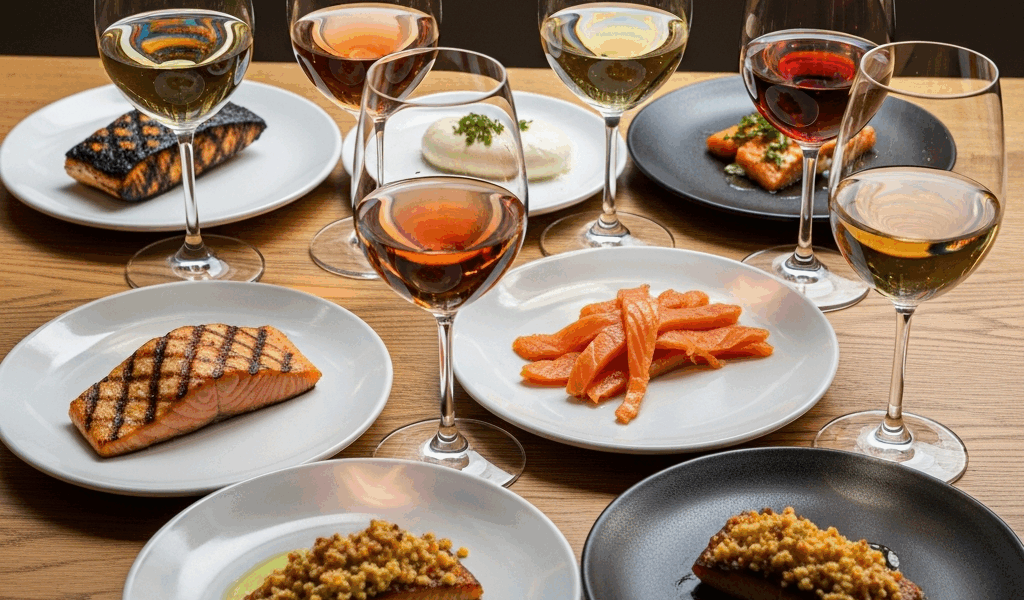
The 6 Best Wines With Salmon by Prep Style
1 — Poached Salmon with Pinot Gris
Wine: Pinot Gris (Alsace style preferred)
Why it works: Poaching keeps the salmon gentle, almost floral — Pinot Gris matches that register without stepping on it. Soft texture needs a wine with some weight behind it.
Watch out for: Italian Pinot Grigio. Runs too lean, too acidic for what poached salmon actually needs. Go Alsatian or Oregon. Trimbach Pinot Gris runs around $22 and is a reliable starting point.
2 — Pan-Seared Salmon with Unoaked Chardonnay
Wine: Unoaked or lightly oaked Chardonnay (Chablis or Mâcon-Villages)
Why it works: The sear builds a crispy crust and a touch of richness. Unoaked Chardonnay has enough body to meet that without turning the whole meal into a butter situation.
Watch out for: Heavily oaked California Chardonnay — it competes with the sear rather than working alongside it. Save that bottle for cream sauce. Which, actually, I’ll get to in a minute.
3 — Grilled Salmon with Pinot Noir
Wine: Pinot Noir (Willamette Valley or Burgundy)
Why it works: Char from the grill needs something with a little earthiness and red fruit. Pinot Noir delivers both without the tannin levels that would clash against the fish oils.
Watch out for: Anything labeled “bold” or “full-bodied.” Honestly, a $14 grocery store Pinot Noir often performs better here than a $45 heavily extracted bottle. Don’t make my mistake of reaching for the impressive-looking one.
4 — Smoked Salmon with Dry Rosé
Wine: Dry Provençal Rosé (Miraval or similar)
Why it works: Smoked salmon brings salt, fat, and intensity all at once. Dry rosé has the acidity to cut through all three while staying light enough not to overwhelm the fish.
Watch out for: Sweet or off-dry rosé — it turns the pairing cloying fast. Look for “sec” or “dry” on the label. Miraval Studio Rosé runs around $20 and is apparently what I now keep stocked at all times.
5 — Herb-Crusted Salmon with Grüner Veltliner
Wine: Grüner Veltliner (Austria — look for Smaragd or Federspiel classifications)
Why it works: Grüner has this signature white pepper note that locks in perfectly with dill, parsley, and tarragon crusts. Almost like the grape was quietly designed for this specific application.
Watch out for: Overly herbaceous Sauvignon Blanc, which makes the herb crust taste aggressive rather than fresh. There’s a fine line between bright and sharp.
6 — Salmon Tartare or Raw Preparations with Crémant
Wine: Crémant d’Alsace or Crémant de Bourgogne
Why it works: Raw salmon is all texture and delicacy. Bubbles cleanse the palate between bites, and the wine’s lean mineral quality keeps everything bright without competing.
Watch out for: The impulse to open Champagne for this. It feels ceremonial but honestly it’s overkill. Crémant gives you the same effect for $18–$25 a bottle. Save the Champagne for something that deserves it.
What About Sauce — How Toppings Change the Pairing
Probably should have opened with this section, honestly. Sauce is the variable that quietly destroys most pairing advice. Follow the prep-method guide above perfectly and still end up in the wrong place — all because of what’s sitting on top of the fish.
Three scenarios that shift things significantly:
Cream-Based Sauces — Go Richer
Beurre blanc, cream dill sauce, anything involving heavy cream — these pull the whole dish into richer territory. I once served unoaked Chablis alongside salmon in a cream sauce and it tasted thin, almost sour against the richness. That was a $28 lesson. The wine needs fat to match fat. A lightly oaked California Chardonnay or a good White Burgundy in the $20–$30 range handles this well. Oaked Chardonnay might be the best option here, as cream sauce requires a wine with some weight behind it — because lean wines simply read as sharp against all that richness.
Asian Glazes and Teriyaki — Off-Dry Riesling
Miso glaze, teriyaki, soy-ginger — these bring sweetness and umami into the equation simultaneously. Dry wines taste harsh and almost metallic against them. Off-dry German Riesling — look for Spätlese on the label, usually $18–$25 — has just enough residual sugar to meet the glaze halfway and enough acidity to keep the whole thing from tasting like dessert. It’s a narrow target but not a hard one to hit.
Citrus and Herb Toppings — Stay Crisp
Lemon-dill, capers, fresh herbs. These keep the dish light. Don’t overcorrect by reaching for something rich out of habit. Albariño, Vermentino, or a clean Sauvignon Blanc — all solid here. High acidity, clean citrus notes, nothing oaked. Nothing sweet. That’s the whole framework.
Red Wine With Salmon — When It Actually Works
Yes, red wine works with salmon. Not always. Not with every preparation. But grilled and cedar-plank salmon are genuinely among the few fish dishes where a red wine earns its place at the table without apology.
The reason is specific. Char from grilling, combined with salmon’s natural fat, provides enough structure for a light-to-medium red to find its footing. Cedar-plank salmon adds a woody, smoky quality that mirrors the earthy character in Pinot Noir — it’s almost a direct flavor echo. I’m apparently a cedar-plank evangelist at this point, and Pinot Noir works for me while other reds never quite land the same way.
One rule holds firm though: stay away from tannic, full-bodied reds. Cabernet Sauvignon, Malbec, Syrah — these aren’t wrong in some theoretical sense. They’re just actively bad here. Tannins react with fish oils and produce a metallic, bitter finish that neither the wine nor the salmon deserves.
Serve the Pinot Noir slightly chilled — 55–60°F is the target. Most people serve red wine too warm. With salmon especially, a slightly cooler bottle keeps the fruit forward and prevents the wine from feeling heavy against the fish. Stick it in the fridge for 20 minutes before opening. Small thing. Makes a real difference.
Quick-Reference Pairing Chart
For everyone who scrolled directly here — this is the short version. No judgment.
- Poached salmon — Pinot Gris (Alsace), Viognier
- Pan-seared salmon — Unoaked Chardonnay, Chablis
- Grilled salmon — Pinot Noir, dry Rosé
- Cedar-plank salmon — Pinot Noir, Gamay
- Smoked salmon — Dry Rosé, Crémant
- Herb-crusted salmon — Grüner Veltliner, Sauvignon Blanc
- Salmon tartare or raw — Crémant, Champagne
- Salmon with cream sauce — Oaked Chardonnay, White Burgundy
- Salmon with teriyaki or miso — Off-dry Riesling, Gewürztraminer



Stay in the loop
Get the latest pairing with wine updates delivered to your inbox.