Why Most Wine and Cheese Pairings Go Wrong
Wine and cheese pairing has gotten complicated with all the conflicting advice flying around. As someone who has hosted more dinner parties than I can count — and ruined more than a few of them — I learned everything there is to know about what happens when you get this wrong. Today, I will share it all with you.
For years I did what most people do. Grabbed a Cabernet Sauvignon because it looked serious, uncorked it at the table, and watched guests smile politely while quietly suffering through their bites of Brie. Nobody said anything. That’s the worst part.
The problem isn’t the wine. It’s not the cheese either. It’s the mismatch — specifically the chemical one nobody talks about at dinner parties.
Big tannic reds coat your mouth with bitter compounds. Creamy, fatty cheeses do the same thing with fat and protein. Put them together and you get a harsh, drying sensation that kills both. Neither wins. You’re left wondering why anyone bothers with pairing at all. I asked myself that question for three years before I figured out what was actually happening.
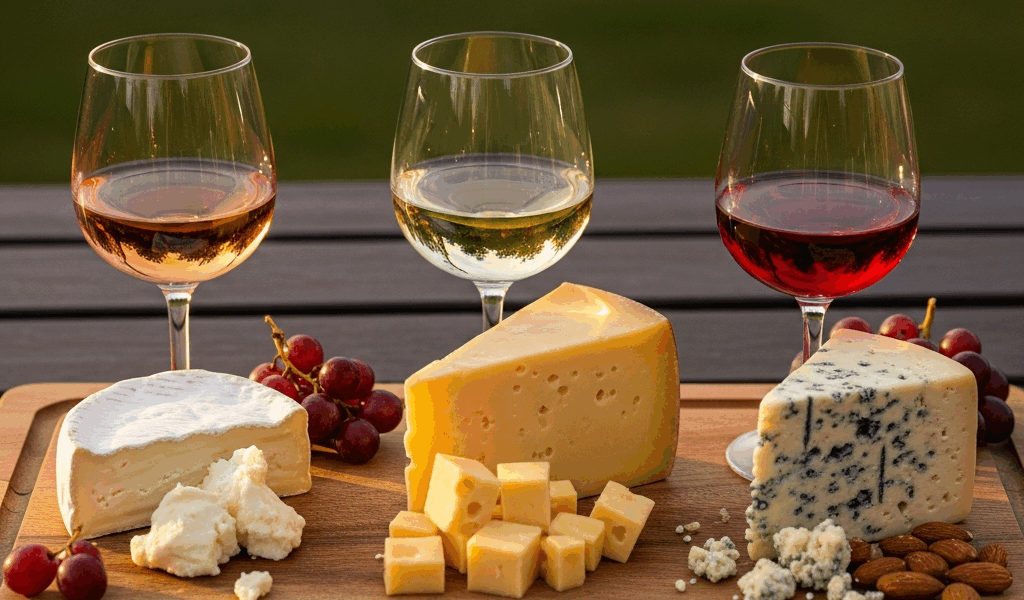
The fix sounds wrong the first time you hear it: go white, not red. Most of the time, anyway. And when you do reach for a red, it should be light and fruit-forward with minimal tannin. Match by cheese texture and intensity — not by what looks impressive on the table. A pale Chablis will do more for a wedge of Brie than any Bordeaux ever could. That’s what makes this pairing logic so endearing to those of us who actually eat cheese regularly. It rewards common sense over status.
Soft and Creamy Cheeses Need High Acid Whites
Soft cheeses — Brie, Camembert, Burrata, fresh mozzarella — run roughly 50 percent fat. That fat clings to your taste buds and numbs them. Acidity cuts through it. The sharpness refreshes your palate between bites, lets the cheese’s delicate flavors come through, and resets your mouth for the next sip. Simple mechanism. Huge difference.
Probably should have opened with this section, honestly.
Champagne and dry sparkling wines are your safest bet here. The bubbles add tactile contrast and the acidity is brutal — in exactly the right way. Still wine? Go with Chablis. It’s unoaked Chardonnay from France’s northernmost region, crisp and mineral, usually $20–$30 a bottle at most wine shops. Sancerre works too. Both have enough backbone to stand up to rich cheese without steamrolling it.
I’m apparently someone who learns exclusively through embarrassing mistakes, and this category gave me a good one. I paired a heavily oaked California Chardonnay — the buttery kind, around $22 — with Brie at a tasting event I was hosting. The oak turned the cheese into something that tasted like wet cardboard. Guests were polite. I was mortified. Don’t make my mistake. Oaked Chardonnay overwhelms soft cheese every single time. The vanilla and caramel notes from the wood bury the delicate flavors you’re actually trying to taste.
For Burrata specifically, try Albariño from Spain. It runs $18–$24, sits around 12.5–13.5% alcohol, and carries a natural salinity that plays beautifully against the creamy interior. Dry Riesling from Alsace works too — look for bottles labeled “Sec” or “Trocken” so you don’t accidentally grab something sweet.
Sharp and Aged Cheeses Can Handle More Body
But what is an aged cheese, really? In essence, it’s any cheese that’s been allowed to develop crystalline texture and concentrated flavor over time — usually six months or more. But it’s much more than that. Aged Cheddar, Gruyère, Comté, Manchego — these have structural complexity that younger cheeses simply don’t. They’re bold. They push back. They can handle a medium-bodied red or a richer white without getting lost.
Pinot Noir is the safest red wine choice here. Lower tannin than Cabernet, higher acidity, and a fruit-forward profile that complements rather than clashes. A Burgundy Pinot will cost you $40–$80. A solid Oregon Pinot from the Willamette Valley runs $25–$35 and honestly performs just as well for this purpose. I keep three or four bottles of the Oregon stuff on hand at any given time.
White wine still works here too — but skip the heavy oak. Unoaked or lightly oaked Chardonnay from Chablis or the Loire Valley pairs beautifully with aged hard cheeses. The mineral notes in the wine echo the nutty, crystalline quality in the cheese. It’s one of those combinations where both things taste more like themselves.
Côtes du Rhône might be the best budget option, as aged cheese pairing requires a wine with fruit weight but minimal tannin aggression. That is because the salt crystals in aged cheese amplify bitterness, so you want fruit doing the heavy lifting, not tannin. Côtes du Rhône — usually a blend of Grenache, Syrah, and Mourvèdre — runs $12–$18, sits light-to-medium bodied, and handles aged Cheddar without any drama. That’s what makes it endearing to those of us building casual cheese boards on a Tuesday.
Blue Cheese Is the Hardest Pairing — Here Is What Works
Blue cheese has gotten a bad reputation in wine pairing circles, with all the horror stories flying around about metallic aftertastes and ruined bottles. Most of those stories are true — but only because people keep reaching for dry red wine out of habit.
Salt in blue cheese amplifies tannins. Amplified tannins taste metallic and bitter. You end up with something genuinely unpleasant that ruins both the cheese and whatever was in your glass. The pairing fails completely.
The proven fix is counterintuitive: go sweet.
Salt and sweetness balance each other — same principle behind salted caramel, same reason it works. A tawny Port or a 10-year vintage Port transforms the experience entirely. The sweetness mellows the cheese’s aggression. The cheese’s salt cuts the wine’s cloying edges. They actually help each other. That was probably the most surprising thing I learned in about four years of experimenting with this.
Sauternes is the other answer. This French dessert wine from Bordeaux runs $30–$60 a bottle, and yes, it’s worth it for a proper blue cheese moment. The botrytis-affected sweetness and thick, honeyed texture cushion the blue cheese’s punch in a way that’s almost architectural. Roquefort and Sauternes appears on wine lists across France for a reason. It’s not trendy — it’s just correct.
While you won’t need to spend Port-level money every time, you will need at least a touch of residual sugar to make blue cheese work. Off-dry Riesling from Germany gets you there without the heaviness. Look for “Kabinett” or “Auslese” on the label. The residual sugar runs around 20–40 grams per liter — enough for the salt-sweet contrast without weighing down the whole tasting experience.
A Simple Rule for Building a Cheese Board With Wine
So, without further ado, let’s dive into the practical part — because theory only takes you so far when you’re standing in a wine shop at 6:45 p.m. trying to figure out what to bring.
Mixed cheese board with soft, aged, and blue varieties? Don’t hunt for one perfect bottle. You won’t find it. Anchor to two wines instead — one white, one light red — and move on with your life.
Albariño handles the soft cheeses. Beaujolais handles the aged varieties and serves as a backup for almost everything else. Beaujolais runs light and fruity at around $15–$20, low tannin, genuinely good at coexisting with food without taking over. It’s not a “serious” wine and it doesn’t pretend to be. That’s exactly why it works.
For blue cheese — skip it entirely if you don’t have Port or Sauternes available. Serve it after the wine course with good bread and salted butter. You sidestep the pairing disaster without anyone noticing. I’ve done this at four dinner parties. Nobody has ever complained.
First, you should internalize the three core principles — at least if you want to stop guessing every time. Acid cuts fat. Sweetness balances salt. Light red beats heavy red almost always. Once those three ideas are in your head, you can improvise at any wine shop, any dinner table, any price point. You don’t need a sommelier’s certification. You need a framework. Match by principle instead of memorization and your cheese boards will start tasting like you actually planned them — because in a sense, you will have.


Stay in the loop
Get the latest pairing with wine updates delivered to your inbox.