Why Sauce Matters More Than the Pasta Shape
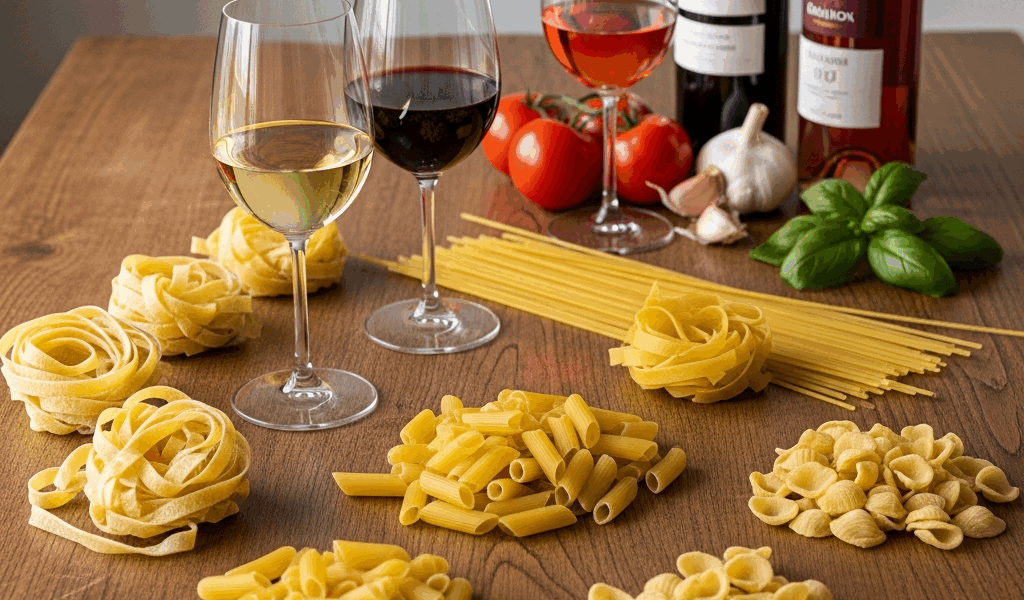
Wine and pasta pairing has gotten complicated with all the conflicting advice flying around. Ask ten people which wine goes with pasta and you’ll get ten answers based on shape — spaghetti, rigatoni, pappardelle — as if the noodle itself is calling the shots. It isn’t.
The sauce is your north star. Full stop.
Pasta shapes exist mainly for texture and sauce cling. A long strand of tagliatelle holds creamy sauces differently than a tube of rigatoni, sure. But the wine pairing lives or dies based on what’s actually coating that pasta — the fat content, the acidity level, the flavor intensity of the sauce itself. Shape is a secondary variable. It might nudge you between two wines in the same family, not flip you into an entirely different category.
Think about it this way: alfredo on fettuccine and alfredo on penne are fundamentally the same pairing problem. The wine that cuts through butter and cream works regardless of the pasta vehicle. What changes slightly is mouthfeel and how the sauce distributes — which can justify reaching for a fractionally crisper white, or a marginally fuller one. Minor adjustments. The sauce is the anchor. Always.
Butter and Cream Sauces — Alfredo, Carbonara, Cacio e Pepe
Probably should have opened with this section, honestly. Cream sauces are where most home cooks completely derail their wine pairing, and it happens for one simple reason: richness.
When you’re staring down a bowl of fettuccine alfredo — butter, cream, Parmigiano-Reggiano — the wine has exactly one job. Cut through the fat. Keep your palate from glazing over halfway through dinner. Flabby, oaky wines only compound the problem. You need acidity. Sharp, unapologetic acidity.
Pinot Grigio is the safe play here, and it earns that reputation every time. A bottle like Ecco Domani Pinot Grigio — usually around $12 at most grocery stores — or anything coming out of the Veneto region works reliably. The wine strips through the richness without competing for flavor space. Unoaked Chardonnay functions similarly. A Chablis-style if your budget allows, or something domestic like an entry-level Sonoma-Cutrer, usually $15–18. The mineral acidity in these whites isn’t optional — it’s the whole point.
What doesn’t work: oaky, buttery Chardonnay. I learned this the hard way, sitting across from someone who’d just uncorked a $35 California Chardonnay — loaded with vanilla and toast — to pair with fettuccine alfredo. The wine and sauce were fighting for the exact same flavor space. Two butter-bombs on one plate. It was a lot. Don’t make my mistake.
Now, carbonara is the outlier. Guanciale — cured pork jowl — brings enough savory, porky weight that a light red can actually work here. I’m apparently more tolerant of red-with-cream combinations than most people I know, and a young Barbera d’Alba works for me while heavier reds never quite land right. A low-tannin Pinot Noir from Oregon’s Willamette Valley, somewhere in the $16–22 range, is another legitimate option. The wine’s acidity still matters. But now you’ve got protein and fat in the equation, and that changes the math. Still, when in doubt, Pinot Grigio won’t fail you.
Cacio e pepe — cheese and black pepper — is simpler than its reputation suggests. The pepper gives you a spice signal that’s asking for acidity plus a little body. Pinot Grigio remains your baseline, but you can confidently reach for a Vermentino or even a dry Riesling if you have one open. Freshness stays essential. The pasta shape — traditionally spaghetti or tonnarelli — changes absolutely nothing about the wine logic here.
Tomato-Based Sauces — Marinara, Arrabbiata, Pomodoro
But what is the core challenge with tomato sauces? In essence, it’s acidity management. But it’s much more than that.
Tomatoes are acidic. Choose a low-acid wine — something soft and fruity with muted tannins — and the wine tastes flat and hollow against that acidity. This isn’t a matter of opinion. It’s chemistry. You need a wine with enough acid to stand shoulder-to-shoulder with the sauce. Otherwise the pairing collapses and dinner feels like a chore.
Chianti Classico is the anchor recommendation, and it’s there for good reason. The Tuscan standard — built on Sangiovese grapes — brings the acidity and structure to meet tomato sauces head-on. A bottle like Ruffino Chianti Classico, around $18–20, sits in the sweet spot. Enough body to feel substantial with pasta, enough acid to keep things bright. You could spend more — Chianti Classico Riserva is beautiful alongside richer tomato ragùs — or you could spend less. This price range is just reliably solid.
Arrabbiata introduces a variable: heat. Red chili flakes in a tomato base shift the pairing slightly. High tannins and hot sauce create friction — actual unpleasant friction — in your mouth. Lower tannins are what you want now, or a wine with a touch of sweetness to absorb the spice. Barbera works beautifully here. It has the acidity but softer tannins than Chianti. A Barbera d’Asti, around $16–20, is a legitimate alternative that some drinkers honestly prefer for spiced tomato sauces.
Or go white entirely. A high-acid Vermentino or dry Albariño can pair with arrabbiata if you’re feeling unconventional. Portuguese Albariño alongside spiced tomato pasta — the wine brings enough minerality to complement the heat without the tannin clash. That’s a combination worth trying.
Basic marinara or pomodoro — straight tomatoes, garlic, minimal additions — is where Chianti Classico shines without question. No need to overthink it. Mid-range bottle, 20 minutes to breathe, done.
Meat Sauces — Bolognese, Ragù, Sausage
This is where bigger reds finally justify their presence at the table.
Meat sauces are the richest category in the pasta world. Beef or pork, slow-cooked with tomatoes, wine, and stock — you’re looking at fat, protein, and umami demanding a wine with actual grip. Not just body. The acid and tannin structure to stand up to everything happening in that bowl.
Sangiovese-based wines are your target. The same Chianti Classico that pairs with marinara works here too, but now you can step up in price and complexity without second-guessing yourself. A Chianti Classico Riserva — or a Vino Nobile di Montepulciano, another Sangiovese-based Tuscan option — partners beautifully with beef ragù. Tannins with substance. Acidity sharp enough to cut through fat. The overall profile matches the intensity of slow-cooked meat in a way that feels almost inevitable.
Beef versus pork matters slightly. A traditional Bolognese — beef-heavy, simmered for three or four hours — pairs best with fuller Sangiovese expressions or even a Barolo if your budget allows for it. Pork-based ragùs are slightly less dense and pair well with mid-range Chianti or Barbera d’Asti if you want something a touch softer. That was a pairing I stumbled onto in 2019 and never stopped recommending since.
Sausage pasta — rigatoni with Italian sausage and tomato, specifically — sits somewhere between the two. Sausage brings spice and fat but lacks the deep umami that long-braised meat develops. A solid mid-range Chianti Classico is your reliable play. You don’t need Riserva level, but you can’t go too light either.
One detail worth mentioning: whatever wine you cooked the sauce with matters more than people realize. Deglazed the pot with Barbera? Use Barbera in the glass. Cooked with Chianti? Reach for Chianti. The sauce already has that wine woven into its flavor profile — matching it in the glass makes the whole thing feel coherent rather than accidental.
Oil-Based and Pesto Sauces — Aglio e Olio, Genovese Pesto
Oil-based pasta pairing has gotten complicated with all the wrong advice flying around. Most competitor articles suggest bold reds or crowd-pleasing Chardonnays. That’s exactly backward.
Oil-based sauces are delicate. Garlic, olive oil, maybe some red pepper flakes. Pesto brings basil, garlic, pine nuts, olive oil, and Parmigiano. Neither sauce has the weight of cream or the acidity spike of tomato. Pairing here demands a wine that doesn’t steamroll the subtle, herbaceous flavors already on the plate.
Heavy reds are the enemy. A big Chianti or Barbera will obliterate the garlic and basil notes entirely — you won’t taste the sauce anymore, just the wine. Vermentino and Verdicchio are your allies. Italian whites from Liguria and Marche respectively, both sitting comfortably in the $14–18 range.
Vermentino — try a bottle from Vermentino di Sardegna, specifically — has a grassy, almost salty character that complements aglio e olio in a way that feels almost too perfect. The wine doesn’t compete with the garlic. It frames it. Verdicchio is earthier, with herbal undertones that echo pesto’s basil in an almost uncanny way. A Verdicchio dei Castelli di Jesi is a specific, confident call worth writing on a sticky note and keeping near your wine rack.
Pinot Grigio works here too, though it’s less interesting. The Vermentino-and-pesto combination, though — that’s where the magic actually happens. If you’re making fresh pesto at home, that pairing alone justifies the effort of pressing the garlic yourself.
One more option: dry Riesling, unoaked if possible. The slight minerality and floral notes don’t clash with basil or garlic. It’s not traditional, but it works. German or Alsatian Rieslings in the $16–25 range are excellent alongside pesto pasta — and they tend to surprise people at the table, which is its own reward.
The pasta shape here matters the least of any category. Spaghetti, linguine, trenette — the wine pairing stays identical because the sauce logic doesn’t change. Pick your white, trust the acid and the minerality, and move on. That’s what makes these lighter pairings so endearing to wine lovers who don’t want to overthink dinner.


Stay in the loop
Get the latest pairing with wine updates delivered to your inbox.