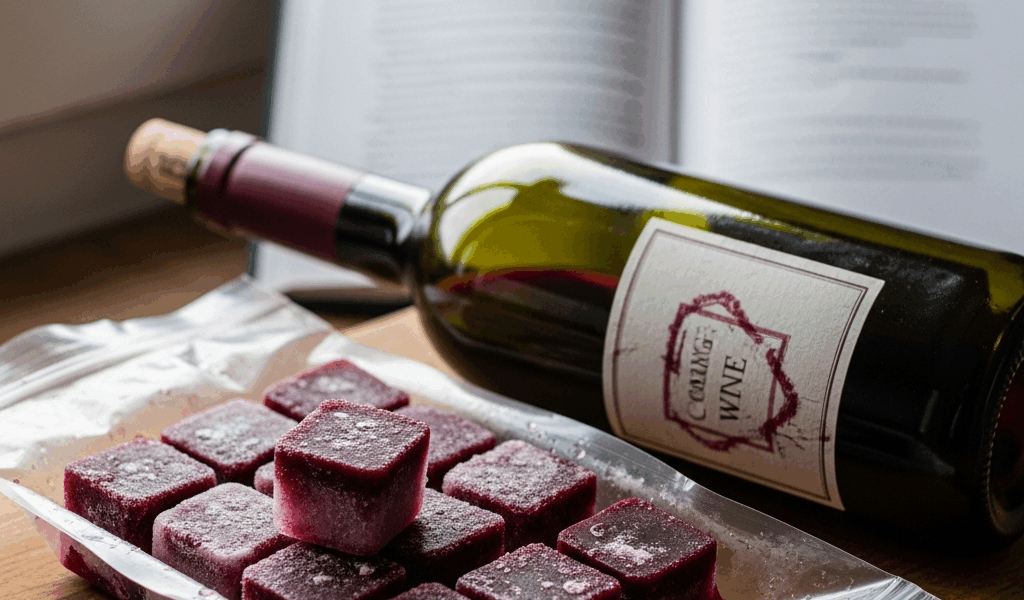
Can You Freeze Wine for Cooking? Yes — Here Is the Right Way
Yes, You Can Freeze Wine for Cooking — Here Is How
Freezing wine for cooking has gotten complicated with all the conflicting advice flying around. Half the internet says do it, the other half acts like you’re committing some kind of culinary crime. As someone who wasted probably two dozen half-bottles learning this the hard way, I learned everything there is to know about preserving leftover wine without losing your mind — or your sauce.
Here’s the scenario. You crack open a decent Cab for a Tuesday night braise, use one cup, and suddenly you’re staring at three-quarters of a bottle you won’t realistically finish. It sits on the counter. Then the fridge. Then it tastes like something from a science experiment and goes straight down the drain. That cycle — honestly — ends the moment you start freezing wine on purpose.
But what is the right method? In essence, it’s silicone ice cube trays filled with leftover wine, frozen overnight, then transferred to labeled freezer bags. But it’s much more than that. The tray size actually matters. I use the OXO Good Grips silicone tray — standard cube size — which holds almost exactly two tablespoons per cavity. Most braising recipes call for wine in quarter-cup or half-cup increments. That’s two cubes or four cubes. Math you can do at 6pm without hunting for a measuring cup.
The actual process goes like this. Pour your leftover wine into the tray, filling each cavity just below the rim — wine expands when it freezes, and cracked trays are annoying. Lay it flat in the freezer. Leave it overnight. Pop the cubes out, drop them into a Ziploc Freezer Gallon bag — not the regular storage ones, the thicker freezer variety — and label the bag with the wine type and date. Probably should have mentioned the labeling part first, honestly. Three months from now you will not remember whether that’s Merlot or Malbec, and they behave differently in a pan.
Frozen wine doesn’t thaw back into something you’d pour into a glass. The aromatics flatten a little, the tannins in reds can hit slightly sharper when raw. None of that matters once it meets a hot pan — the alcohol burns off, the fruit concentrates, and what’s left is exactly the kind of depth a sauce needs. You’re not drinking it. You’re building something you’re going to eat.
Which Wines Freeze Best for Cooking
Not all wines behave equally in the freezer — and this is where most cooking sites just stop. They’ll say “use leftover wine” without distinguishing between a $12 Sauvignon Blanc that still has life in it and a $14 Pinot Grigio that was already fading when you opened it. What the wine was before freezing determines what you actually get in the pan.
Reds — Go Bold
Full-bodied reds freeze exceptionally well. Cabernet Sauvignon might be the best option, as cooking wine requires genuine structure and concentration. That is because high tannins and dark fruit give it something to lose — and it still delivers after the freeze-thaw cycle. I keep a dedicated bag of Cab cubes specifically for short ribs, lamb shanks, and any tomato sauce that needs backbone. Merlot runs a close second. Softer tannins, still plenty of body — it plays beautifully in mushroom sauces and beef stews where you want richness without the drying edge Cab sometimes brings.
Malbec works well too. It freezes cleanly, brings a dark plum note that pairs well with pork. Syrah — or Shiraz, same grape, different accent — is worth keeping in rotation if you do a lot of slow-roasted meats. The peppery quality survives the freeze better than you’d expect.
Delicate reds like Pinot Noir are a different story. It won’t hurt anything to freeze it, but Pinot’s whole personality is its subtlety. Freezing strips some of that out, and you’re left with a shadow of what it was. Save it for drinking. Use something bolder in the braise.
Whites — Crisp and Structured Wins
Sauvignon Blanc is the white I freeze most often. High acidity, citrus-forward, holds up through freezing better than most — drop a frozen cube into a pan for seafood or a lemon cream pasta and it performs like it just came out of the bottle. Muscadet is an underrated option too, apparently. Often under $12, freezes cleanly, brings a mineral quality to shellfish that’s genuinely useful.
Unoaked Chardonnay freezes reasonably well for cream sauces and chicken dishes. Oaked Chardonnay, though — messier proposition. The buttery vanilla notes can turn slightly waxy after freezing and thawing. I found this out after a chicken piccata that wasn’t ruined, exactly, but wasn’t right either. Don’t make my mistake. Check the label before you freeze it.
How Long Frozen Wine Lasts
Probably should have opened with this section, honestly, because it’s the first question most people ask.
Three to six months is your window. Inside that range, the wine does its job in a recipe without any noticeable drop-off. Push past six months and things start to slip — fruit dulls, the wine picks up a flat, slightly oxidized character even from the freezer, and you start tasting it in the finished dish. It won’t make anyone sick. It just won’t be as good. That’s a real difference in a sauce you spent an hour on.
Labeling isn’t optional — it’s the whole system. Write the variety and freeze date on the bag with a Sharpie. I keep a strip of masking tape on each bag and write on that — easier to peel off and replace when you refill over time. Reds on one side of the freezer, whites on the other. Takes thirty seconds to organize and saves genuine confusion three months later.
When you’re ready to cook, skip the thawing step entirely. Drop frozen cubes straight into a hot pan or simmering pot. They melt almost immediately on contact with heat and integrate without any fuss. Thawing on the counter first is just an extra step you don’t need.
Wines You Should NOT Freeze
Frozen by the urge to preserve something expensive, plenty of home cooks have made the mistake of freezing wines that were never meant for the freezer. I’ve made some of these myself — more than once, if I’m being honest.
Expensive bottles — just drink them. A $45 aged Burgundy or a single-vineyard Barolo does not belong in a Ziploc bag. If you opened it for dinner and have half left, that wine deserves to be finished over the next two days with good cheese, not converted into braising liquid. The complexity you paid for is genuinely lost in the freezer. Freeze a $10 Merlot for your short ribs. Drink the good stuff.
Sparkling wine — absolutely not. Champagne, Prosecco, Cava — freezing kills carbonation permanently. Flat sparkling wine has no special cooking properties that justify the effort. If there’s leftover bubbly, use it in a cocktail that same evening. It doesn’t freeze into anything useful.
Very delicate whites — Pinot Grigio, Vinho Verde, most Gewürztraminer — these are built around freshness and aromatic fragility. Freezing strips those qualities out and leaves something thin and characterless in the pan. Nothing you couldn’t do better with a more structured white anyway. That’s what makes bold, affordable reds and crisp whites endearing to us home cooks — they’re forgiving, they’re cheap, and they work.
The principle worth holding onto is simple. Freeze wines that cook well in the first place. If a wine is too subtle or too precious to throw into a pot, it’s too subtle or precious to freeze. Bold, structured, affordable — those three things cover it. Everything else follows from there.


Stay in the loop
Get the latest pairing with wine updates delivered to your inbox.