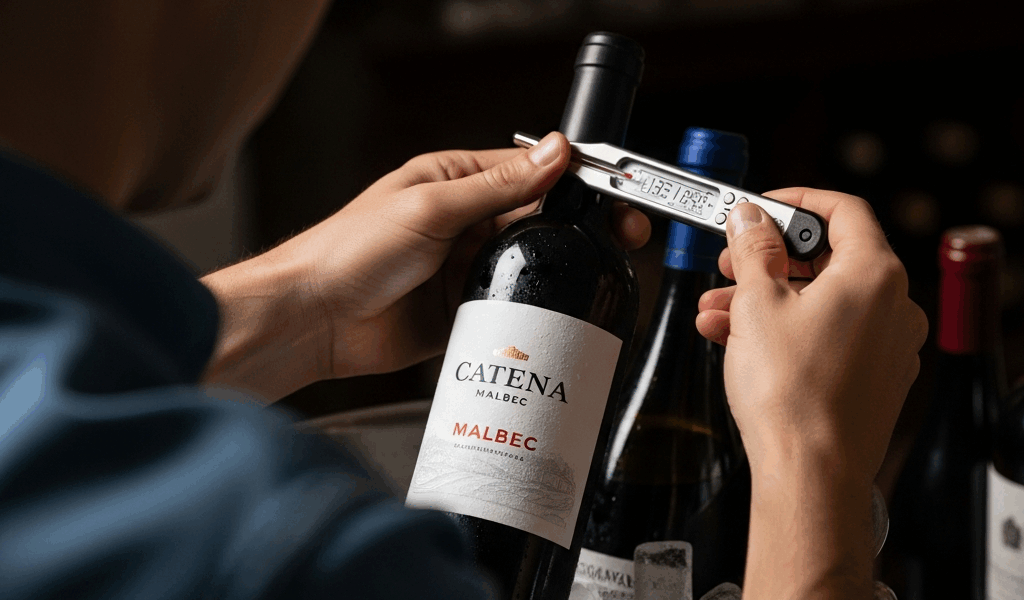
Do You Chill Malbec? How to Serve It at the Right Temperature
Malbec has gotten complicated with all the conflicting advice flying around. Chill it, don’t chill it, serve it at room temperature — everyone has an opinion. As someone who ruined a perfectly good bottle of Zuccardi Valle de Uco by serving it at full Australian summer room temperature, I learned everything there is to know about getting this wine right. It tasted like warm blackberry jam cut with rocket fuel. Genuinely unpleasant. That single experience sent me down a rabbit hole I haven’t fully climbed out of.
The Short Answer — A Brief Chill Helps, But Don’t Make It Cold
Probably should have opened with this section, honestly. If your bottle is sweating on the counter right now — just go put it in the fridge for 20 minutes and come back. Everything below is elaboration.
The target range is 15°C to 18°C. That’s roughly 60°F to 65°F. Write it on a sticky note. Tape it inside a cabinet. Whatever it takes.
But what is “room temperature” when it comes to wine? In essence, it’s a lie — or at least a very old one. The original rule about serving reds at room temperature dates back to European wine estates where rooms sat around 16°C to 18°C naturally. It’s much more than outdated advice, though. It’s actively misleading anyone living somewhere warm. Your living room in July is probably closer to 22°C or 23°C. That’s not Malbec territory.
Fifteen to twenty minutes in a standard refrigerator — not a freezer, not an ice bucket — gets you there. The goal isn’t cold red wine. The goal is “slightly cooler than your instincts tell you,” and that distinction matters more than most people expect.
What Temperature Does to Malbec Specifically
Temperature shifts every red wine, but Malbec responds in ways that are unusually obvious — probably because of what makes the grape distinctive in the first place.
Malbec’s whole identity is built on dark fruit. Blackberry, plum, black cherry. Underneath that, chocolate, violet, sometimes leather or earth depending on where it’s grown. Those flavor compounds are volatile. They need a specific temperature window to actually show up. Outside that window, something less interesting takes over.
Too warm — above 20°C — and the alcohol turns aggressive. Most Argentine Malbecs land between 13.5% and 15% ABV. That’s not nothing. At higher temperatures, the alcohol hits your nose before the fruit does. The wine tastes hot and oddly flat. Chocolate notes disappear entirely. What remains is a blunt, heavy sweetness that wears you out fast.
Too cold — below 12°C or so — flips the problem. The fruit shuts down completely. Malbec at near-refrigerator temperature tastes thin, stripped of the plush texture that makes it worth drinking. Tannins feel sharper and drier than they really are. Not undrinkable — just a shadow of what the wine actually is.
That 15°C to 18°C sweet spot is where everything opens up. Dark fruit comes forward. Chocolate sits underneath, giving the wine weight without heaviness. Tannins feel smooth rather than grippy. If you’ve ever tasted Malbec and thought “I don’t understand the fuss” — there’s a decent chance temperature was the problem. Don’t make my mistake.
The Fridge as a Tool, Not a Destination
One thing worth clarifying: chilling Malbec means using the refrigerator as a quick temperature correction — not as storage. Long-term fridge storage dries out the cork, kills the aromatics, and treats a decent wine with contempt. Short trips only. In and out.
The 20-Minute Fridge Rule
Frustrated by yet another too-warm bottle at a backyard barbecue, I started actually timing the cooling process properly. My fridge — a Samsung RF28R7351SR running at about 3°C to 4°C — became an unlikely piece of wine equipment. Starting from a room temperature of roughly 22°C, a standard 750ml bottle reaches 15°C to 16°C in about 18 to 22 minutes. Call it 20 minutes flat. That number holds up reliably across most normal kitchen conditions.
A few variables that shift the timing:
- If the room is warmer than 22°C, add five minutes.
- If the bottle has been sitting near a window and feels warm to the touch, add another five on top of that.
- Wrap it in a wet paper towel before putting it in the fridge — this speeds cooling slightly and can shave three or four minutes off the process.
- Don’t use the freezer. I’ve done this. I’ve forgotten about it. The wine technically survives, but near-frozen Malbec is not an experience worth pursuing at any time savings.
The simplest check requires no thermometer: press the bottle against the back of your wrist. Slightly cool — not cold, not warm — means you’re there. Imprecise, sure. Works better than you’d expect.
What About Argentine vs French Malbec?
Most people associate Malbec with Argentina — Mendoza, the high-altitude Uco Valley, producers like Catena Zapata or Achaval Ferrer. But Malbec is originally a French grape. It still has a genuine stronghold in the Cahors region of southwest France, where locals call it Côt, or occasionally Auxerrois. Same grape. Genuinely different wine. That difference affects how you approach serving temperature.
Argentine Malbec
Argentine Malbec might be the best option for first-time Malbec drinkers, as the style requires no patience to enjoy. That is because the high-altitude sun exposure concentrates the fruit in ways that make the wine immediately generous — rich, full-bodied, dark fruit upfront, with enough structural depth to handle a slightly cooler pour. Serving Argentine Malbec at 15°C works well. Bigger, oakier examples — think Clos de los Siete or the upper tier of Alamos — can even sit right around 14°C to 15°C without feeling closed.
French Cahors Malbec
Cahors is a different animal entirely. Earthier, more tannic, restrained where Argentine Malbec is generous. Where Argentine Malbec throws fruit at you immediately, Cahors holds back — there’s an austerity to it that takes time in the glass. Serve it too cold and that austerity tips into severity. Unwelcoming. Cahors generally wants the warmer end of the range, around 17°C to 18°C, giving the tannins room to soften and the earthy, tobacco-edged fruit time to emerge.
The practical takeaway: if you’ve pulled a bottle of Château Lagrezette or Clos Triguedina from a cellar sitting at 14°C or 15°C, let it warm on the counter for 10 minutes. That’s the one scenario where the whole fridge rule reverses on you.
A Few Other Things Worth Knowing
Wine glasses matter here — more than most people want to admit. A thin-walled glass sitting at room temperature will warm a properly chilled Malbec noticeably within about 10 minutes of pouring. On a hot day, chill your glasses briefly — a minute in the freezer, or just fill them with cold water while you grab the bottle. Empty them, pour, drink. Simple enough.
Decanting and temperature interact, too. While you won’t need any special equipment, you will need a little planning ahead. For a young, tannic Malbec — the kind that benefits from 30 to 45 minutes in a decanter — chill the bottle first, then decant. The wine warms gradually as it sits, which is actually ideal. It arrives at the glass close to perfect without any fussing.
That’s what makes Malbec endearing to us wine drinkers — small adjustments produce genuinely noticeable results. Twenty minutes in the fridge. Argentine bottles toward the cooler end of the range. Cahors toward the warmer end. Too warm, and the alcohol takes over. Too cold, and the fruit disappears. Get the temperature right and you’ll understand, pretty quickly, why people get worked up about this grape.




Stay in the loop
Get the latest pairing with wine updates delivered to your inbox.