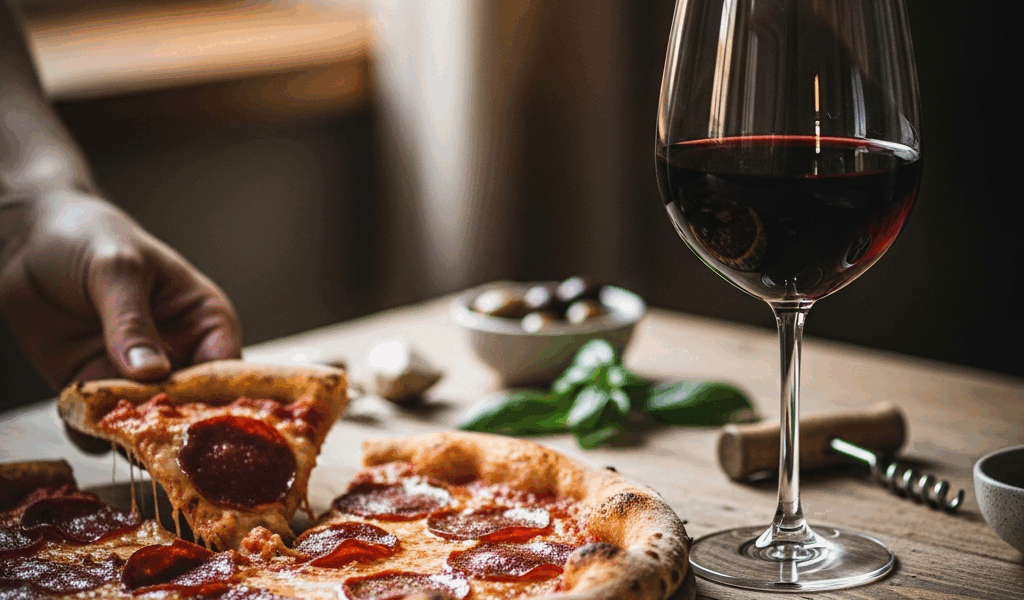
Best Wine with Pizza — What Actually Works by Topping
Wine with pizza has gotten complicated with all the lazy “just grab a Chianti” advice flying around. As someone who spent the better part of three years hauling bottles to pizza nights and scribbling notes on napkins, I learned everything there is to know about this subject — including how wrong most of the conventional wisdom actually is. The real answer isn’t one bottle. It isn’t even one grape. It changes completely depending on what’s sitting on top of that dough.
[foxdog-disclosure]
The good news? There’s a framework. Once it clicks, you won’t need a cheat sheet ever again.
The Rule of Pizza and Wine — Match the Sauce, Not the Crust
Forget the crust. Thin, thick, Neapolitan, Detroit-style — honestly, the crust is just a delivery mechanism. Flavor lives in the sauce, and that’s where the decision starts.
Red sauce means red wine. Tomato is acidic, slightly sweet, savory. It needs something with comparable acidity — otherwise the pairing tastes flat and muddy. High-acid Italian reds have the backbone to meet tomato sauce at eye level. Low-acid bottles just collapse next to it.
White sauce gives you permission to go white. Cream- or ricotta-based sauces are rich and fatty without the sharp fight-back of tomato. That’s a job for something crisp and clean.
No sauce at all — olive oil, garlic, a drizzle of pesto — means the toppings are running the show. Work with those instead.
That’s the whole framework. Matching the sauce first eliminated probably 80% of the bad pairings I made in year one, when I was choosing wine based on whatever mood I was in rather than what was actually on the pizza.
Pepperoni and Sausage — What Red Wine Works
Don’t make my mistake. For the longest time I kept reaching for a bold Cabernet Sauvignon — the kind of wine I’d want with a ribeye — because pepperoni felt aggressive and meat-forward. Completely wrong move. High-tannin wines clash with the fat and salt in cured meats and make everything taste bitter. I noticed it first with a $28 Napa Cab I genuinely liked on its own. Next to a slice of pepperoni, it tasted like chewing on a tea bag. Not ideal.
The fix was going Italian and going medium-bodied.
Sangiovese
But what is Sangiovese? In essence, it’s the grape behind Chianti. But it’s much more than that — it’s probably the most pizza-native variety on the planet. High natural acidity, moderate tannins, savory cherry flavors that complement tomato sauce instead of competing with it. For pepperoni specifically, the slight earthiness in a good Chianti Classico cuts right through the grease and makes each bite taste cleaner.
A solid starting bottle is the Fontodi Chianti Classico — usually $30 to $35. Tight budget? The Ruffino Riserva Ducale Tan Label runs about $18 and holds up well at a Friday-night-pizza price point.
Nero d’Avola
I pulled toward a Sicilian pizza one evening just to see what would happen — poured a Nero d’Avola alongside it almost by accident — and that combination has been in regular rotation ever since. Dark fruit, a little chocolate, good acidity, none of the drying tannin structure of a Cab. It works especially well with Italian sausage, particularly the kind with fennel. The wine carries this spice note that rhymes with the fennel in a way that feels intentional even when it absolutely isn’t.
Try the Cusumano Nero d’Avola. Widely available, usually under $15. Honest wine for a pizza night.
Lighter Syrah
Not a big, jammy California Syrah — a lighter, peppery northern Rhône-style Syrah might be the best option here, as spicy sausage pizza requires something that can mirror heat without amplifying it. That is because wines like Crozes-Hermitage carry a natural black pepper quality that echoes the spice rather than clashing with it. Cave de Tain makes a solid entry-level Crozes-Hermitage for around $20.
Margherita and Vegetable Pizzas — Lighter Options
Probably should have opened with this section, honestly. Margherita is the purest version of the form — tomato, fresh mozzarella, basil — and it’s where most people should start when thinking seriously about pizza and wine. Fresh basil is delicate. Good mozzarella is milky and mild. Bring a full-bodied red to a Margherita and you’re essentially yelling over a quiet conversation. The wine wins, and you lose the pizza.
Chianti — Again, For Good Reason
Yes, Chianti again. That’s what makes Sangiovese endearing to us pizza people — it works across the whole red-sauce spectrum. For Margherita specifically, I prefer a lighter Chianti or a straight Sangiovese from Romagna rather than a richer Classico. The goal is freshness. The Montevertine Pian del Ciampolo, around $22, has a brightness that plays well with basil without steamrolling it.
Vermentino
This is the recommendation that gets the most surprised reactions — every single time. Vermentino is a white wine from Sardinia and coastal Tuscany — crisp, slightly saline, with citrus and herb notes that feel almost seaside. Against a Margherita with fresh tomatoes rather than cooked sauce, it’s genuinely excellent. The herbal quality amplifies the basil. The acidity handles the tomato. It makes complete sense once you’re actually drinking it.
The Argiolas Costamolino Vermentino di Sardegna is the bottle I keep coming back to — around $16, widely distributed. Order it once and you’ll understand why Sardinians apparently drink white wine with tomato-based food without a second thought.
Dry Rosé
For vegetable pizzas — roasted peppers, zucchini, eggplant, caramelized onion — a dry Provençal rosé is the most versatile option I’ve landed on. Enough acidity for the tomato sauce, enough body for the sweetness of roasted vegetables. The Miraval Rosé runs about $20. It’s also the bottle I bring when I genuinely have no idea what toppings are going to show up on the table.
White Pizza and Mushroom — The Surprising Whites
White pizza changed how I thought about all of this. Before I started paying attention, I’d default to red — pizza felt like a red-wine food, full stop. But white pizza with a ricotta base, some garlic, maybe a drizzle of truffle oil — that’s an entirely different flavor world. It opened up pairings I hadn’t considered for years.
Unoaked Chardonnay
The word “unoaked” is doing a lot of work in that heading. An oaked, buttery Chardonnay next to a rich white pizza creates this situation where everything tastes identical — heavy, creamy, undifferentiated. Unoaked Chardonnay, particularly from Burgundy or the Mâconnais region, has enough weight to handle creamy sauce while the acidity cuts through it. The Louis Jadot Mâcon-Villages is around $15 — clean, mineral, just enough fruit to stay interesting. Against white pizza with roasted garlic and fresh herbs, it’s genuinely one of my favorite pairings at any price.
Pinot Grigio — The Real Version
Not the mass-market, flavorless stuff filling grocery store shelves. An Alsatian Pinot Gris or an Italian Pinot Grigio from Alto Adige — wines with actual texture and weight while remaining crisp. The Santa Margherita Pinot Grigio Alto Adige specifically (not the regular bottling — the Alto Adige label, around $25) has a creaminess that mirrors white sauce while the acidity keeps the whole thing from feeling like a nap.
Grüner Veltliner
For mushroom pizza — white sauce or olive oil base with roasted mushrooms — Grüner Veltliner might be the best option, as earthy mushroom toppings require something with a savory, mineral edge to match them. That is because Grüner carries a distinct white pepper and herbal quality that’s strange next to most foods but clicks with mushrooms in a way that feels almost engineered. The Gobelsburg Gobling Grüner Veltliner is around $14. Try it once with a mushroom and truffle pizza. You’ll remember it.
BBQ Chicken and Hawaiian — The Wild Cards
These are the pizzas that break the sauce rule entirely. BBQ sauce is sweet, smoky, and tangy. Pineapple is sweet and acidic. Neither behaves like traditional pizza sauce, and the wines that actually work here are not what most people reach for — at all.
Zinfandel for BBQ Chicken
This pairing surprised me more than any other on this list. BBQ chicken pizza — smoky-sweet sauce, charred chicken, red onion, cilantro — is bold and American in a way Italian wines simply don’t address. Zinfandel from Dry Creek Valley in Sonoma matches the sweetness of the BBQ sauce without being flattened by it. The jammy dark fruit plays against the smokiness in a way that genuinely works.
The Ridge Lytton Springs Zinfandel blend (around $45) is what I reach for when I want to eat this well. The Seghesio Sonoma Zinfandel at around $22 is the weeknight version — consistent, satisfying, never disappoints.
Off-Dry Riesling for Hawaiian
Hawaiian pizza — pineapple, ham, tomato sauce — is one of the most polarizing foods in existence. I’m not here to litigate whether it belongs on pizza. What I will tell you is that an off-dry Riesling is the best wine for it, and honestly nothing else comes particularly close.
A German Spätlese or a slightly off-dry Alsatian Riesling mirrors the pineapple rather than fighting it. The high acidity handles the tomato sauce. The lightness doesn’t bulldoze the ham. It sounds like a joke until you actually try it. The Dr. Loosen Blue Slate Riesling Kabinett runs about $18 — just enough residual sugar to make the pairing click without tipping into dessert territory. I brought this to a pizza night as a quiet experiment once and three separate people asked what the wine was. That doesn’t happen when a pairing is merely okay.
Wine with pizza is one of those subjects where generic advice exists because no one has actually sat down with a slice of BBQ chicken pizza and worked through the problem properly. Start with the sauce rule, use the toppings to fine-tune, and you’ll consistently land somewhere that makes both the pizza and the wine better than either one was on its own.
[foxdog-inline-cta asin=”B0028LI9JS” title=”Rabbit Wine Aerator and Pourer” tag=”pairingwithwine-20″]



Stay in the loop
Get the latest pairing with wine updates delivered to your inbox.