Can You Freeze Wine for Cooking? Yes — Here Is the Right Way
Yes, You Can Freeze Wine for Cooking — Here Is How
Can you freeze wine for cooking? Absolutely. I wasted probably two dozen half-bottles finding this out the hard way before I figured out the right system. You open a nice Cab for a weeknight braise, use a cup, and then stare at the rest of the bottle knowing you probably won’t finish it before it turns. So it sits on the counter. Then it sits in the fridge. Then it tastes like vinegar and goes down the drain. That cycle ends the moment you start freezing wine intentionally.
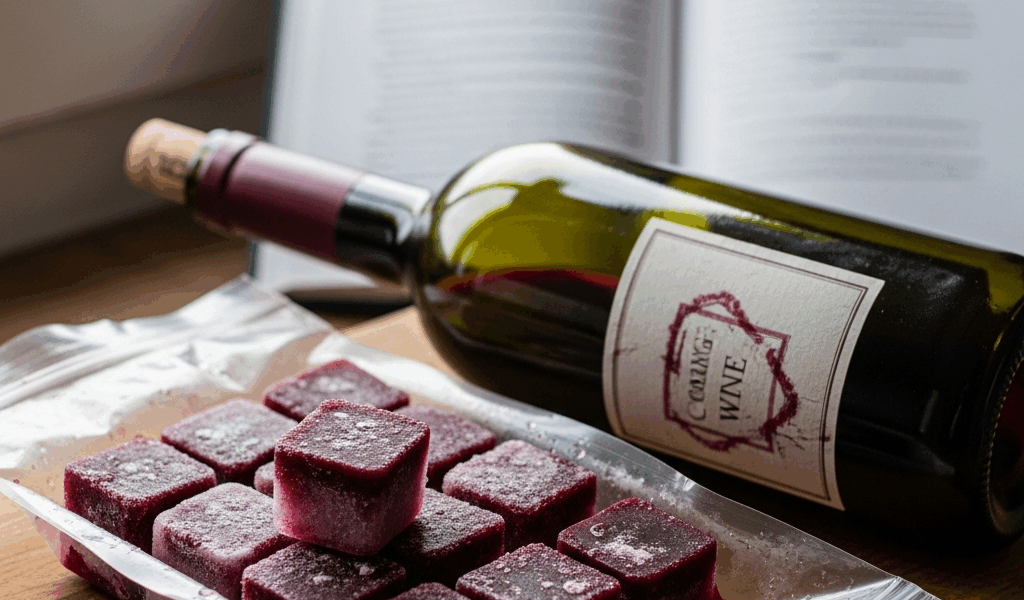
The method that actually works is ice cube trays — specifically silicone ones, which release frozen cubes without a wrestling match. I use the OXO Good Grips silicone ice cube tray, the standard size, which produces cubes that hold almost exactly two tablespoons of liquid each. That measurement matters more than it sounds. Most braising and sauce recipes call for wine in quarter-cup or half-cup increments, which means two cubes or four cubes. You can do that math in your head at 6pm on a Tuesday without pulling out a measuring cup.
Here is the actual process. Pour leftover wine into the tray, filling each cavity to just below the top — wine expands slightly as it freezes and you don’t want it cracking the tray or making a mess. Lay the tray flat in your freezer. Leave it overnight. Once the cubes are solid, pop them out and transfer them into a Ziploc freezer bag. I use the Ziploc Freezer Gallon bags, not the regular storage ones — the thicker plastic matters for preventing freezer burn and off-smells from seeping in. Label the bag with the wine type and the date. That part is not optional. Three months from now you will not remember whether that bag holds Merlot or Malbec, and they behave differently in a pan.
Frozen wine does not thaw to its original drinking form. The texture softens, the aromatics flatten slightly, and the tannins in red wines can come across as slightly more bitter when raw. None of that matters once it hits a hot pan. Heat transforms everything. The alcohol burns off, the fruit concentrates, and what you’re left with is exactly what a sauce needs — depth, acidity, structure. You are not pouring this into a glass. You are building a foundation for something you’re going to eat.
Which Wines Freeze Best for Cooking
Not all wines behave equally in the freezer, and this is where most cooking sites stop short. They’ll tell you “use leftover wine” without distinguishing between a $12 bottle of Sauvignon Blanc and a $14 Pinot Grigio that’s already fading. The wine’s character before freezing determines what you get in the pan after.
Reds — Go Bold
Full-bodied reds freeze exceptionally well. Cabernet Sauvignon is my top choice for freezing. It has enough tannin structure and dark fruit concentration that even after freezing and thawing, it still delivers when reduced into a pan sauce or a slow-cooked braise. I keep a dedicated bag of frozen Cabernet cubes for short ribs, lamb shanks, and any tomato-based sauce that needs backbone. Merlot is a close second — slightly softer tannins, still plenty of body, and it plays beautifully in mushroom-based sauces and beef stews where you want richness without the drying astringency Cab can bring.
Malbec works well too. It freezes cleanly and brings a dark plum note that works well with pork dishes. Syrah or Shiraz is worth keeping in rotation if you cook a lot of slow-roasted meats — the peppery notes survive the freeze-thaw cycle better than you’d expect.
Avoid delicate reds like Pinot Noir for freezing if you can help it. It’s not that it’s harmful — it’s that Pinot’s entire personality is its subtlety, and freezing strips some of that out. Save it for drinking or use it the same night.
Whites — Crisp and Structured Wins
Sauvignon Blanc is the white I freeze most often, and for good reason. Its high acidity and citrus-forward profile hold up through freezing better than most whites. Dropped frozen into a pan for seafood, clam sauce, or a lemon cream pasta, it performs like it just came out of the bottle. Muscadet is another underrated option for seafood cooking — often under $12 a bottle, freezes well, and brings a clean mineral quality to shellfish dishes.
Unoaked Chardonnay freezes reasonably well for cream sauces and chicken dishes. Oaked Chardonnay is a messier proposition — the buttery, vanilla oak notes can turn slightly waxy after freezing and thawing, which is not what you want in a pan sauce. I learned this after ruining a perfectly good chicken piccata. It wasn’t inedible, but it wasn’t right either.
How Long Frozen Wine Lasts
Probably should have opened with this section, honestly, because people often ask the storage question before anything else.
Three to six months is your window for frozen cooking wine. Within that range, the flavor is solid and the wine does its job in a recipe without any noticeable degradation. Push past six months and things start to slip — the fruit dulls, the wine picks up a flat, slightly oxidized character even from the freezer, and you start to notice it in the finished dish. It won’t make anyone sick. It just won’t taste as good.
Labeling is essential. Write the wine variety and the freeze date directly on the bag with a Sharpie. I keep a strip of masking tape on each bag and write on that — easier to remove and replace when you refill the bag over time. Organize your freezer bags by color — reds on one side, whites on the other. Takes thirty seconds to set up and saves real confusion later.
When you pull a cube for cooking, there is no need to thaw it first. Drop frozen cubes directly into a hot pan or a pot of simmering liquid. They melt almost immediately on contact with heat and integrate into the dish without any issue. Thawing on the counter beforehand is just an extra step you don’t need.
Wines You Should NOT Freeze
Frozen by the temptation to preserve a bottle that cost real money, plenty of home cooks have made the mistake of freezing wines that were never meant for the freezer. I have made some of these mistakes myself.
Expensive wines — don’t. Just drink them. A $45 bottle of aged Burgundy or a single-vineyard Barolo does not belong in a Ziploc bag in your freezer. If you opened it for a dinner party and have half a bottle left, that wine deserves to be finished over the next two days with good cheese, not converted into braising liquid. The complexity you paid for is genuinely lost in the freezer. Freeze a $10 Merlot for your braises. Drink the good stuff.
Sparkling wine — absolutely not. Champagne, Prosecco, Cava — freezing kills carbonation permanently. Flat sparkling wine is sad to drink, and it has no special cooking properties that justify the effort. If you have leftover sparkling wine, use it in a cocktail that same evening or let it go. It does not freeze into something useful.
Very delicate whites — Pinot Grigio, Vinho Verde, most Alsatian Gewürztraminer — these wines are built around freshness and aromatic fragility. Freezing strips those qualities out and leaves you with something thin and characterless. They won’t add anything interesting to a sauce that a more structured white wouldn’t do better.
The broader principle is this: freeze wines that cook well to begin with. If a wine is too subtle or too precious to throw into a pot, it is too subtle or precious to freeze. Bold, structured, affordable — those are the three criteria worth holding onto. Everything else follows from there.




Stay in the loop
Get the latest pairing with wine updates delivered to your inbox.