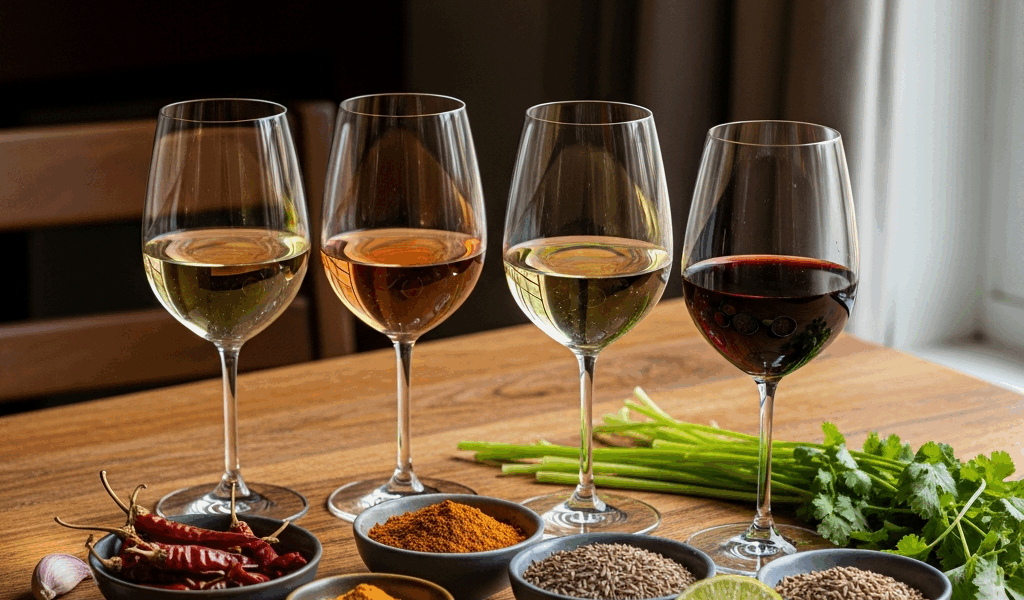
Why Most Wine Makes Spicy Food Worse
Wine and spicy food has gotten complicated with all the conflicting advice flying around. Ask ten sommeliers, get twelve opinions. I spent three years living in Bangkok before any of it clicked — and even then, it took burning my mouth through enough bad pairings to finally understand what was actually happening. Every bottle I brought home made the heat worse. Not a little worse. Dramatically, sweat-on-your-forehead worse.
The culprit wasn’t the flavor. It was chemistry, and pretty simple chemistry at that.
Alcohol amplifies capsaicin. That’s the short version. Tannins amplify it further. When you drink a 14.5% ABV Cabernet Sauvignon alongside Thai curry, the alcohol dissolves capsaicin oil and spreads it across every surface in your mouth instead of diluting it. Tannins then bind to heat receptors. You’re not tasting wine anymore — you’re just getting burned from the inside out, slowly, for the next ten minutes.
This isn’t a pairing problem. It’s a fire management problem.
Dry reds with high alcohol and grippy tannins are basically gasoline on the flames. Your instinct to reach for wine to cool down gets completely sabotaged. Most people don’t realize this, so they grab whatever red is on sale and spend the whole dinner wondering why they’re suffering. Probably should have opened with this section, honestly — it changes everything about how you approach the bottle.
What to Look For in a Wine That Handles Heat
The solution isn’t mysterious. Three traits. Any wine that checks all three will survive spicy food without making you miserable.
Lower alcohol. Stay under 13%. This matters more than anything else on the label. A 12% ABV wine won’t dissolve capsaicin the way a 15% one does — that’s not opinion, it’s solubility. Riesling, Prosecco, and Chenin Blanc tend to land here naturally. An 11.5% Gewurztraminer and you’re already ahead.
Residual sweetness or bright fruit. Not dessert-wine sweetness. Just enough sugar or fruit intensity to coat your palate and interrupt the burn. Off-dry Riesling typically carries 1–2% residual sugar. That’s enough. A Viognier with honeyed peach notes does the same job — the texture sits between your mouth and the capsaicin like a buffer.
Soft or no tannins. Tannins are that drying, slightly dusty sensation you get in big reds. Fine with a ribeye. With spicy food, they’re a liability. Whites have virtually none. Light reds like Grenache or Tempranillo carry far fewer than Cabernet. This one is non-negotiable.
Every recommendation later in this article hits all three. If a wine only clears one or two of them, skip it.
Best Wine Pairings by Spicy Cuisine Type
Thai — Gewurztraminer or Off-Dry Riesling
Thai heat doesn’t arrive alone. It brings lemongrass, lime leaf, and fish sauce — sharp, herbaceous, layered. Gewurztraminer matches that intensity without flinching. Look for bottles in the 12–13% range with that slightly oily, almost waxy texture. Trimbach makes a reliable one for around $18 that doesn’t taste thin or precious.
Off-dry Riesling works even better if you want something a little lighter. The residual sugar won’t make the wine taste like candy — instead, it softens the alcohol’s effect while the wine’s acidity cuts right through coconut cream. A German Kabinett-level Riesling sitting at 8–10% ABV is honestly the move. Mosel bottles from Dr. Loosen or Selbach run under $20 and punch way above that price point. I keep a case of the Selbach in my fridge during summer.
Indian — Viognier or Chenin Blanc
This one splits depending on the dish. Creamy curries — coconut milk, fenugreek, ghee — need something with actual body and apricot character. Viognier from the Rhône does this well. It’s weighty enough to hold up against richness, floral enough to work with warm spices, and low enough in tannins to stay out of trouble. Yalumba’s Viognier from Australia sits at $16–20 and handles butter chicken without flinching.
Dry-heat Indian food is a different story. Tikka masala with black pepper and cumin wants Chenin Blanc instead — sharper acidity, more subtle sweetness. South African Chenin Blanc is your friend here. A bottle from Raats Family Wines gives you genuine complexity without any pretension, and it costs less than $15 at most retailers. Don’t make my mistake of reaching for Viognier with a vindaloo. That was a rough Tuesday.
Mexican — Light Grenache or Tempranillo
Mexican spice is earthy. Dried chiles, cumin, Mexican oregano — it’s not the sharp citrus heat of Thai food. You want a light red that won’t drown in oak or show aggressive tannins. Grenache from Spain or southern France fits beautifully. The wine’s simple red-fruit quality complements chile heat without competing with it. Campo Viejo and Marqués de Cáceres both make 12–13% bottles under $12 that taste like actual wine rather than extract.
Tempranillo is the safer call if you’re new to red wine with spicy food. Earthier than Grenache — which mirrors the dishes better, honestly. A Rioja Crianza has enough age to feel considered, enough fruit to feel alive, and soft enough tannins to stay in the background where they belong.
Sichuan — Prosecco or Sparkling Wine
Sichuan peppercorns don’t just burn. They numb. That tingling, almost electric sensation is chemically different from capsaicin heat, and a wine engineered to neutralize capsaicin won’t help you here. You need bubbles. Literally, physically, bubbles.
Carbonation interrupts the numbing sensation between bites. Prosecco’s gentle sweetness and low alcohol — usually 11–12% — mean it won’t amplify anything. It just resets your palate and gets out of the way. Valdobbiadene-region Prosecco is noticeably better than mass-market bottles, but even the basic stuff outperforms any still wine here. A bottle runs $12–18 and is something you’d want to drink regardless of what’s on the table.
Demi-sec Champagne or a Vouvray does the same job with more complexity — but Prosecco is the practical choice, and it knows exactly what it’s doing.
Wines to Avoid With Spicy Food
Know the landmines. I’m apparently someone who has to learn things the hard way, and the trial-and-error approach works for me while skipping straight to the answer never quite sticks. So here’s what I figured out the expensive, uncomfortable way.
Oaky Chardonnay. Oak adds tannins and dryness. California Chardonnay with heavy barrel aging sits at 13–14% ABV and tastes like butter mixed with wood smoke — which sounds worse than it is, until you drink it next to green curry. The heat feels heavier and longer. Dramatically so.
High-tannin Cabernet Sauvignon. This is what most people default to. It’s the worst option. Young Cabernet’s tannins coat your mouth and hold capsaicin like a vise. The heat lingers for minutes. Then the wine’s fruit gets bullied by the spice on top of everything else.
Anything over 14.5% ABV. Hard line. Cross it and alcohol becomes a flavor element that compounds heat rather than sitting alongside it. A 15% Zinfandel or Shiraz will leave your mouth feeling raw in a way that no amount of water fixes.
Tannic reds in general. Nebbiolo. Barolo. Most Bordeaux. Beautiful wines — genuinely. Wrong moment entirely. Save them for roasted meat and a quiet evening with good cheese.
A Simple Rule for Picking on the Fly
The hotter the dish, the sweeter and lighter your wine should be. That’s it. That’s the rule.
You don’t need to remember Sichuan versus Thai when you’re standing in the wine shop, hungry, fifteen minutes before dinner. You need something that just works. So remember this: low alcohol, some sweetness, no tannins. Three things.
Off-dry Riesling beats almost everything else for pure versatility — that’s what makes it endearing to us spicy-food people who want one reliable answer. Gewurztraminer and Prosecco are your backups depending on the cuisine. Avoid anything dark, oaky, or bottle-aged. The best wine pairing with spicy food isn’t the fanciest bottle on the shelf. It’s the one that steps aside and lets you taste both the food and the drink at the same time.



Stay in the loop
Get the latest pairing with wine updates delivered to your inbox.