Why Wine With Sushi Is Harder Than It Looks
Wine pairing with sushi has gotten complicated with all the contradictory advice flying around. “Just order white wine.” “Sake only.” “Champagne with everything.” As someone who has eaten through sushi bars from Portland to Seattle to a tiny omakase counter in Chicago that seated eight people, I learned everything there is to know about getting this wrong before I started getting it right. Today, I will share it all with you.
The wake-up call was a 2019 dinner at a sushi bar on Portland’s east side. I ordered a bottle of oaked Chardonnay — the sommelier called it “elegant with raw fish,” which should have been my first warning sign. By the second nigiri, the wine tasted like wet lumber. Forty-two dollars, mostly untouched.
So, without further ado, let’s dive in.
Here’s what makes sushi genuinely tricky: you’re not pairing with one flavor. You’re pairing with five simultaneously. Umami from the fish and soy. Acidity and sweetness from vinegared rice. Fat and protein from the raw fish itself. Heat from wasabi. And then a possible third element — mayo, eel sauce, tempura breading — that changes everything again. A spicy tuna roll drowning in sriracha mayo is nothing like a piece of pristine yellowtail nigiri. Same restaurant. Completely different bottles.
Most wine guides gloss over this distinction. They’ll say “white wine pairs with sushi” and consider it handled. That’s what makes specific, category-by-category thinking so endearing to us actual sushi drinkers. General advice produces the wet-lumber situation. Specificity produces a genuinely good meal.
Best Wine for Nigiri by Fish Type
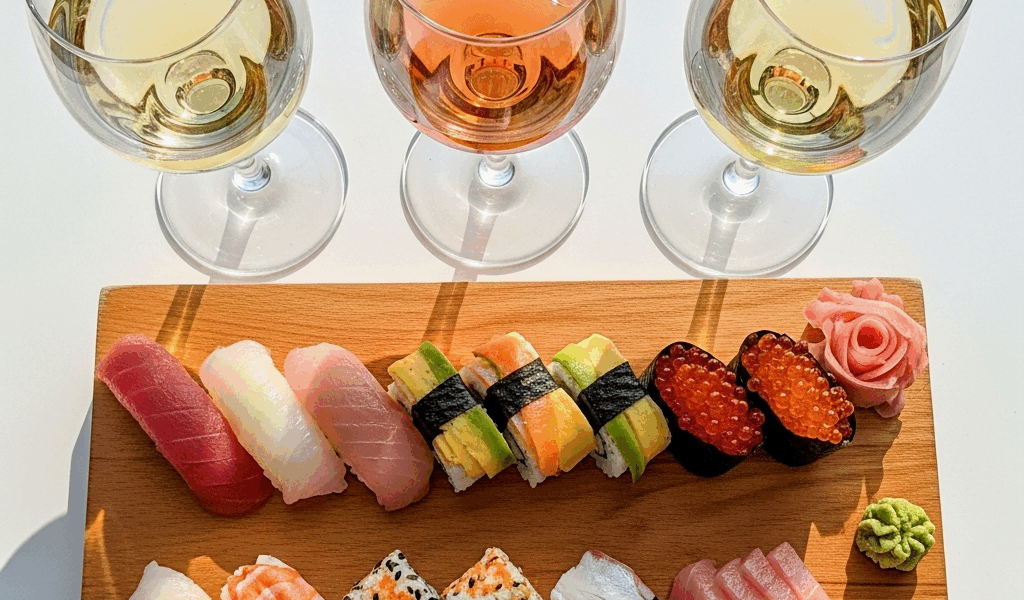
Nigiri is the foundation. Fish, rice, sometimes a thin smear of wasabi underneath. That’s it. No mayo hiding things. No fried elements muddying the picture. This is where you actually taste the fish — which means the wine decision lives or dies on fat content and delicacy.
Salmon Nigiri
Salmon is buttery. Rich in a way that coats your palate if the wine isn’t doing its job. Pinot Gris or unoaked Chardonnay cuts through that fat without steamrolling the fish.
Alsatian Pinot Gris — I’ve been buying the Trimbach Réserve around $22 lately — has a slightly floral quality that actually complements salmon’s natural sweetness. The acidity matters here more than anything else. It cleanses between pieces. Keeps the wine from sitting heavy. Unoaked Chardonnay, specifically Chablis or an entry-level white Burgundy, works for the same reason: enough body to hold its own against salmon, none of the vanilla notes that turn raw fish into a disaster.
Tuna Nigiri
Lean ahi tuna and fatty toro are essentially different animals. Treat them that way.
For regular ahi: dry rosé. Provence rosé in the $15–20 range has enough body to match tuna’s meaty texture without tannic weight. Stays crisp. Doesn’t fight the rice. For fatty tuna, toro specifically — a light Pinot Noir becomes viable. But watch the alcohol. Anything above 13.5% amplifies umami against soy sauce in a way that turns almost metallic. That’s not a fun sensation.
Yellowtail Nigiri
Hamachi is buttery but delicate. A harder balance to hit than salmon. Grüner Veltliner or Albariño fit better here than almost anything else.
Austrian Grüner Veltliner — usually $16–25 for something worth drinking — has this mineral, faintly peppery edge that brightens yellowtail’s richness without overwhelming it. Albariño brings genuine salinity. Something almost oceanic about it that echoes the fish itself. Both wines run around 12% alcohol. That’s the sweet spot for delicate nigiri. Low enough to stay out of the way.
Shrimp Nigiri
Cooked shrimp nigiri is fundamentally different from everything else on the menu. Sweet, slightly firm, zero rawness. It won’t clash with bubbles — and bubbles are exactly what it needs. Cava or Champagne. Full stop.
Carbonation adds texture where cooked shrimp can feel one-dimensional. Cava in the $12–18 range has a slight sweetness that mirrors the shrimp’s natural flavor. Champagne works too, obviously, though it’s arguably overkill if you’re not already opening a bottle for the table.
Probably should have opened with this section, honestly — sparkling wine solves more sushi pairing problems than most people ever realize.
Best Wine for Spicy and Sauced Rolls
This is where every nigiri rule falls apart. The moment mayo enters the picture — or spicy sauce, eel sauce, tempura breading — the wine has to negotiate multiple flavor layers at once. Sweetness stops being a liability and becomes the whole point.
Spicy Tuna and Volcano Rolls
But what is the right wine for sriracha mayo and eel sauce? In essence, it’s something with enough residual sugar to buffer heat. But it’s much more than that.
Off-dry Riesling is not just acceptable here — it’s the correct answer. Mosel Riesling ($14–22) typically carries 4–12 grams of residual sugar per liter. Enough to soothe the burn. Not enough to taste like dessert. The high acidity cuts through mayo’s richness, and the wine’s slight fruitiness complements rather than fights the spice.
I spent three years ordering rosé with spicy rolls. A chef in Seattle — this was at a small counter spot in Capitol Hill, maybe twelve seats — finally pointed me toward Riesling during a particularly regrettable volcano roll situation. Don’t make my mistake.
Eel Sauce Rolls
Unagi sauce is sweet and savory simultaneously. Thick, glossy, it clings to everything and doesn’t apologize about it. Gewürztraminer or demi-sec sparkling wine handles this combination without breaking a sweat.
Alsatian Gewürztraminer ($16–26) has enough sweetness and spice character to echo the sauce’s complexity — while keeping enough acidity to avoid feeling cloying. Demi-sec Vouvray or Loire sparklers, usually $18–28, work through carbonation and that residual sweetness working together. Bubbles cut through the sauce’s heaviness. The sugar prevents a jarring contrast.
Tempura Rolls
Anything fried needs carbonation or aggressive acidity. That’s not a preference — it’s physics. Tempura shrimp rolls, vegetable tempura, shrimp and avocado with that thick fried shell — they all demand Champagne, Cava, or dry sparkling wine. The bubbles actively scrub your palate after each bite.
Function-wise, Cava ($12–18) does exactly what Champagne ($30–60) does here. Skip still wines entirely. You’ll taste nothing but grease.
Best Wine for Sashimi and Omakase Courses
Sashimi is pure fish. No rice, no sauce, no structural support. Just protein, fat, and texture. The wine has to stay completely out of the way — which sounds easy and is actually one of the harder things to get right.
Champagne, Chablis, and dry unoaked whites are essentially the only safe options. Champagne’s high acidity and fine bubbles work with pristine fish without imposing their own flavor agenda. Chablis — unoaked Chardonnay from the Chablis region specifically, $18–35 — is mineral and clean in a way that California Chardonnay simply isn’t. It enhances rather than masks. A dry Sauvignon Blanc from the Loire Valley ($14–20) also works; the herbaceous quality actually brightens raw fish rather than fighting it.
Oaked wines fail completely here. Oak brings vanilla. Toast. Notes that have genuinely no business near raw fish. I’m apparently someone who needs to learn this lesson twice — a $40 bottle of Sonoma Chardonnay, chosen optimistically, tasted like fish sticks stored in a cabinet. That was 2021. I remember it clearly.
For omakase specifically — the chef-driven tasting format where you eat whatever arrives — order Champagne and stay there. Dry sparkling wine is the only pairing that doesn’t turn strange as the chef moves through six or eight different fish varieties, some raw, some cured, some briefly torched. It’s neutral gear. High-end omakase restaurants suggest it because it’s genuinely the right answer, not because they want to sell expensive bottles.
What to Avoid and Why It Goes Wrong
Heavily oaked Chardonnay: Vanilla and butterscotch notes clash with raw fish in an almost aggressive way. The oak reads as wood shavings next to anything delicate. Skip it for sushi entirely — save it for roasted chicken, where it belongs.
Bold Cabernet Sauvignon or tannic reds: Tannins meet soy sauce and produce something metallic and faintly bitter that lingers across every subsequent bite. The wine coats your mouth. The fish tastes wrong. Not worth running the experiment.
High-alcohol wines above 14.5%: These amplify wasabi heat in a way that stops being interesting almost immediately. Your sinuses burn. Your eyes water. The wine tastes hot rather than flavorful. Lower alcohol is always the correct direction.
Overly thin, astringent whites: Bone-dry Sauvignon Blancs without fruit character taste harsh against umami-rich food. You need enough body to actually complement, not just slice through everything indiscriminately.
The pattern becomes obvious once you stop thinking in generalities and start thinking in specifics. Match the wine to the actual fish, the actual preparation, the actual sauce on the plate — not to a category called “sushi” that contains multitudes. That’s what makes category-by-category thinking so useful to those of us who’ve wasted enough good bottles learning this the expensive way. Different fish need different bottles. Different preparations need different strategies. One answer never works. Now you know why.


Stay in the loop
Get the latest pairing with wine updates delivered to your inbox.